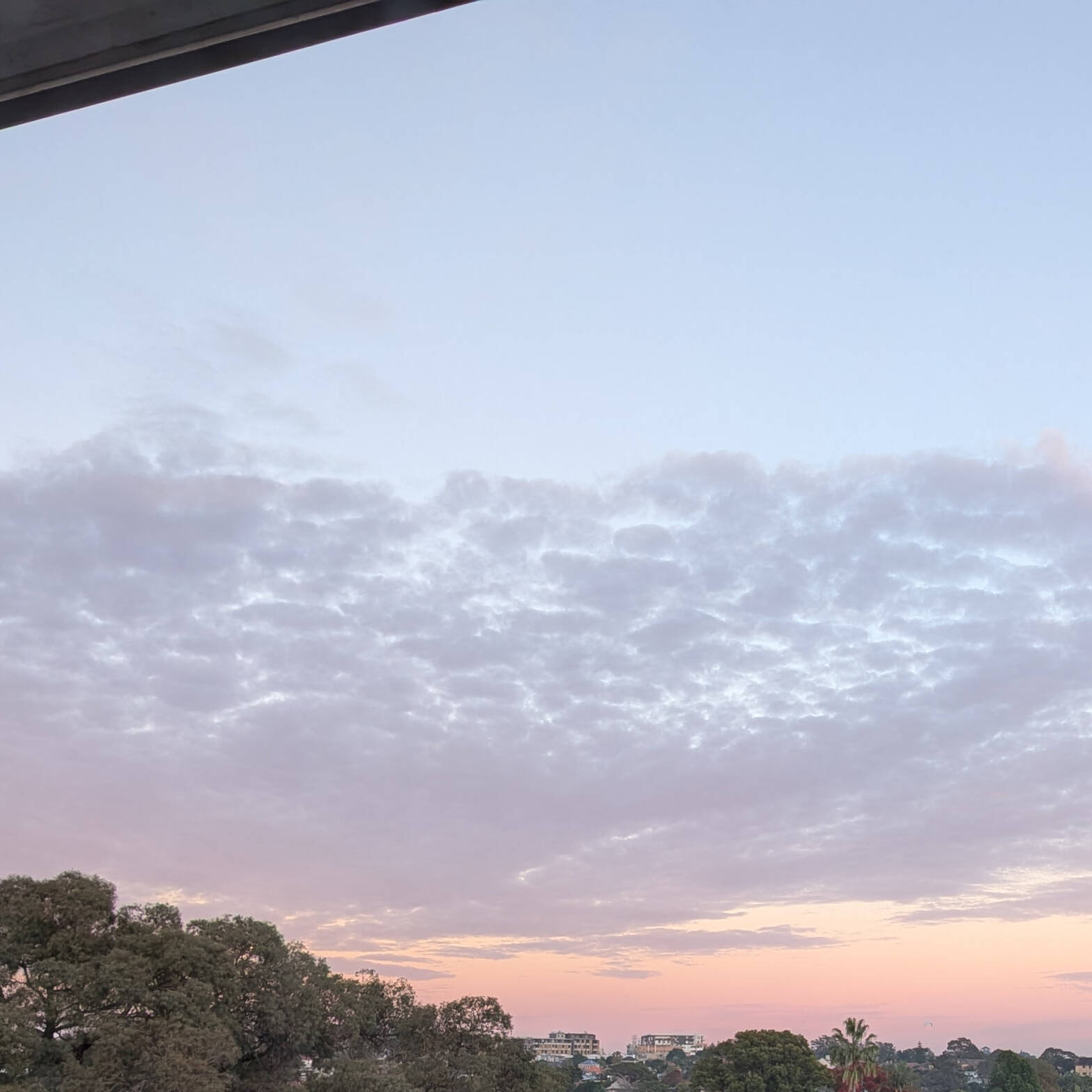
The body is already image, in the sense that our mind is always creating the sense of the body, holding a way of looking at the body that renders it a certain way. In this practice we intentionally bring in different images to notice what happens in the body space. Sitting as a mountain, as empty space, as a vast sky, or wrapped head to toe in fine cloth — each of these does something to the felt sense of the body, shifts or alters it in some way, even just subtly. Then we open to letting an image form, becoming receptive to whatever might appear in the mind, trusting the image as having meaning. This all points to the insight that images are always occurring and that the way we relate to the body and to image is always intertwined.
Tag: meditation
Calm Abiding with Curiosity and Openness
This practice plays in the space between samatha and imaginal practice. The unifying quality here is curiosity. This allows calm abiding practice to develop by making the meditation object more interesting and therefore easier to stay with. Curiosity also is key for opening to the imaginal and welcoming in imaginal senses and figures. Through first stabilising in the body and calming the mind, we can then release into a sense of trust, dropping into other depths of experience. Openness then becomes a key to reveal emptiness — that things are not as solid as they might initially seem, but instead are open to interpretation and ways of being perceived.
Uncle Chwan: A ghost monk
I never met my Uncle Chwan. I’ve only seen a small sepia-tinged photo of him on the altar at my Aunty’s house, next to photos of Ah Ma and Ah Kong, my paternal grandparents. The youngest of eight siblings, he was kind and gentle. My Dad and Aunty talk of their little brother as the nice one of the family. I can sense the truth in this.
All eight of my Dad’s siblings moved from Malaysia to Australia to go to university. After graduating with an accounting degree, Uncle Chwan decided to become a Buddhist monk in the Thai Forest tradition. This was the time — the family was healthy and well, he’d finished his studies, and something called him to live a different life.
He travelled to Thailand to ordain in the Ajahn Chah lineage at Wat Pa Nanachat — known locally as the monastery for westerners. The details are cobbled together from stories I’ve heard from family and from a monk who was there at the time. To ordain he was required to arrive with few possessions and no money, taking motorbike rides through jungles, giving up everything he knew to live with strangers. He turned his life upside down at 21 for a chance to dedicate himself to something greater.
Uncle Chwan’s Dharma name was Nyanaviro in Pali — meaning “courageous in wisdom” or “one whose courage is knowledge”. This Thai Forest tradition is characterised by austere, relentless dedication to the path.
A couple of years after ordaining, Uncle Chwan became ill. The abbot of the monastery had encouraged the monks to be equanimous with their illnesses rather than seek medicine, a reticence to which Uncle Chwan was already inclined. When his illness got worse, he continued meditating in his kuti. After he didn’t come to the morning chanting and meditation, he was found dead by another monk.
It was incredibly rare for a monk to die so young. The monastery held a special ceremony and dozens of monks travelled from the surrounding towns to pay their respects. But almost all of my family couldn’t travel to such a remote place at that time. The cause of death was said to be encephalitis caused by malaria or rabies. If caught early, this could have been treated. Death by equanimity.
I’m haunted by his ghost. He first came to me in meditation cautiously, hesitantly. I was unsure of opening to this dimension and the image flickered and faded in turn.
Eventually I allowed the image to come. Uncle Chwan visits me — adorned in ochre robes, shaved head, thin-framed glasses. He sits by me. Sometimes he offers me a smile, or a gentle hand on my shoulder. I sense that he is always with me, a phrase I’d dismissed when hearing others talk about these presences. I feel held in a kind embrace, watched over. During a month-long retreat, I experienced so much pain and mental anguish that I felt close to giving in, but I continued on, comforted by his presence in my imaginal sangha. He sat among my field of support.
I can’t explain the tenderness and kindness I feel from this image. What I feel is love. I feel heartbreak. I feel a family that was shattered at his death and maybe never recovered. I feel both endless grief and limitless compassion. I break down into tears when I see his half-smile. I’m held in his Loving Presence.
—
In loving memory of Uncle Chwan and Kow Ee Poh.
I’m offering a day of imaginal practice online on Sunday 3 May — if this kind of exploration calls to you, you’re welcome to join.
Figures of Loving Presence
I stumbled into this practice when following a Tara Brach guided meditation. The instruction, distinct from other metta practices I’d done, was to bring forward the phrase “may I be held in Loving Presence”. Almost immediately I felt a sense of receiving love and compassion and of being held in a warm embrace. This feeling was accompanied by an image of my grandparents, Ah Ma and Ah Kong. I sensed that I was receiving this love from them, from this image, as a form of unconditional love. It was incredibly touching and nourishing — I felt deeply seen and known, cared for, and safe. By feeling into this image, I could receive in a different way, not solely coming from my own intention, but rather held in this whole field. Imaginal practice opens up the possibility of opening to these qualities in a deeply nourishing and healing way — allowing us to be held in Loving Presence. Here you will be invited to bring this phrase to mind and to allow any images that arise in response — people from your life like friends, family, partners; teachers of significant figures you have known; or mythical or iconic figures such as Quan Yin or the Buddha.
Image: wood carving of Kuan-yan (Guanyin) with Amitābha on its crown (c. 1025). Northern Song dynasty, China, Honolulu Museum of Arts.
Credit: By Haa900 – Own work, Public Domain, https://commons.wikimedia.org/w/index.php?curid=7146040
Opening the Imaginal Felt Sense of the Body
Images are always at play in the way we feel our body and make sense of our experience. In meditation practice we can bring in different images as a way of cultivating different ways of looking — each image shifts our relation with experience, opening new ways of being. In this practice, you will sit like a mountain: imperturbable, solid, unmoving. Then you will open to whole body awareness, tuning in to the felt sense of the whole field of feeling. By being in relation with this field, you come to see it as insubstantial, shifting, and open — like patterns of light, or a lava lamp. Finally you can bring in the image of sitting as Buddha-nature — clear, pristine awareness expressed through your body.
The Nine Stages of Calm Abiding
The Elephant Path is an ancient meditation teaching, believed to be a transmission from the Buddha-to-be Maitreya and written out by Asanga in around 500 CE. It describes the Nine Stages of Calm Abiding — a map of how experience shifts as the mind deepens in meditation. In this meditation, we traverse all the stages, using the appropriate antidotes and techniques at each stage to progress to the next. Through this we move from scattered monkey mind all the way to effortlessly stable attention. By practising The Elephant Path, you learn how to navigate the mind and how to cultivate different states of mind. This makes the mind a nice place to be — not only from landing in calm and clarity, but also from the confidence of knowing how to move the mind appropriately to whatever is present at any given moment.
Meditation Workshop: Exploring Imaginal Practice
~ A full-day Dharma Deep Dive ~
Event details
9:00 – 5:00 pm AEDT (Sydney time)
Sunday 3 May 2026
Online via Zoom
Description
Why does practice come alive for some people and not for others? Often this has to do with the sense of the path itself. When practice is alive and full of fire, there is a rich sense of the possibility and vision of the teachings, and a sense of the capability of the practitioner. This is the guiding image of practice that can be sensed into, played with, and reignited through imaginal practice.
This workshop will open up possibilities of Imaginal Meditation Practice. More than just imagination or visualisation, this is the exploration of how images (seen, felt, heard, and known in the mind) arise in meditation. When we move towards images rather than passing them off as distractions, spontaneous experiences of meaning and depth arise. Opening to the imaginal also opens to resource and creativity, even becoming a source for novel ideas and drawing connections that can be taken into art, work, and relationships.
We begin our exploration by tuning into the felt sense of the body and then bringing in different images of the body that can shift perception. Sitting as a mountain brings grounding and stabilising, seeing the body as filled with light is often energising, or seeing all experiences as waves in an ocean of awareness opens up spaciousness. Practising with images reveals that experience is more fluid and constructed than we tend to assume. This also makes Imaginal Practice a way to open up insight and to understand emptiness.
The power of images comes from embodied experience — a kind of poetic perception. They reveal more than just the physical world or the mind, opening to unexpected resonance. These practices draw from the work of Rob Burbea, who taught extensively on extending insight meditation into other dimensions of experience to open more freedom and meaningfulness.
About this format
This workshop curriculum will be taught through a method of embodied experience delivered through guided meditations that point out key insights, supported by talks, Q&A, and group discussion. The day will include grounding, breathwork, and anchoring practices to support your exploration.
You are asked to participate by engaging in the practice during the session so that you get first-hand experience. You are also asked to bring your questions and practice experiences to the whole group and to your practice pod, as well as to listen generously as part of the community.
The event is structured as a full day to provide the opportunity for deep focus, while you temporarily put aside other concerns.
Please attend for the whole day. It can be highly beneficial to be in silence for the day, and especially to minimise technology usage. However, you are not required to be in full silence. We encourage you to do what you can to create a supportive environment for your practice.
This is an online event. You will need a device with Zoom installed. Please ensure you have a consistent internet connection.
A background meditation practice is recommended. You do not need prior experience with imaginal practices or a strong capacity for detailed visual imagination. This workshop is geared primarily towards practitioners with an established practice, but open to those who sense possibility here. This work can open unexpected territory — please consider your own situation in terms of feeling grounded and stable. After registration you will receive further information and resources.
Pointing out the path through the mist
Imagine yourself atop a misty mountain, fog obscuring every direction. As you stand here, you know the terrain is complex — mountains and valleys, rivers and ravines. You gaze around and see only haze. Peaks rise over clouds, the way there shrouded in mystery.
“Wow, that’s some nice mist. Now mist that nice must be covering something pretty specky.”

Original public domain image from Art Institute of Chicago
You know that you aren’t on the highest peak, yet it was a long climb to get here. It took everything you had, for all of your life, to move higher, to do better. Hesitant to begin descending, you take off your bags. You get cosy where you are. Thoughts arise in pensive moments: “well, this isn’t so bad, I’ll just make the most of this” as you open a can of beans from your stash. You’ve become stuck in a good place. Then something calls to you. The possibility of higher peaks. More mountains to climb. To more deeply know yourself. To see what you are capable of. To experience the full range of freedom and meanginfulness.
When you go to take the next step you realise it must be downwards. Stepping down is awkward and your feet hurt when landing on uneven rocks. Trying anything from here is a tad uncomfortable. Whatever comes next challenges you and makes you question whether to stay or try for the next peak.
This is where a guide comes in handy: someone who’s been to a higher mountain can share tales of that place, the path to get there, and what the view looks like from the next peak.
To follow the guide you have to be willing to trust — to set off on a journey that first leads down the mountain, then hopefully up the next one. You commit to following the path long enough to really see if it leads to a higher mountain. Without momentum, you’ll take a few steps then turn back. A good guide instils trust and confidence that each step has its place in the whole journey.
Rediscovering the Joy of Being Taught
For a long time, I attended teachings but they somehow didn’t land. Even when talks were interesting and enjoyable, I sat thinking “this won’t change my meditation tomorrow.” Worse yet, techniques would get mixed and I’d find myself looking for landmarks that were off in the other direction entirely. Something changed in the past 18 months. I’ve attended retreats and workshops where the teachers were doing something genuinely different. I rediscovered the joy of being a student and having things to learn. I delighted in the voyage to get to the next peak.
One time I was learning a new framing of the practice of calm abiding. I was already very familiar with this practice from another set of teachings. I found the first few meditations challenging — I was grinding through, trying to make sense of it, comparing and contrasting to what I already practised, thinking I’d made a mistake to ever leave my cosy hilltop. I was homesick. Realising that this was a golden opportunity right in front of me, I gave in to the new instructions; I trusted the guide. Once I stopped resisting, I quickly landed in effortlessness — not through sitting a long time as I had been taught, but through following elegant, efficient moves. This felt experience of tranquility is now right there, just a few steps away.
Rather than learning from a book, I was being welcomed into a new landscape and invited to play there. I was given new frameworks and maps, but more importantly, I was told where to step so I could feel it in my body. I could sense, in real time, how my understanding shifted and opened up.
From this experience I realised I could do more to show others the views I’d seen myself.
The guide first meets you exactly where you are. Then they point out the way to the next vista. Each step unfolds into the next. When you really land in where you are, the questions begin to form of where to go next, the fog opens up with each step you take until you are steady on the path under your feet.
Meditation Workshops
Let’s unfold a path of meditation that feels alive in your bones. We can walk the trail to the next summit.
My new offering is Meditation Workshops — a full day deep dive. The ask is a full day of your time for a chance to explore the teachings, coming out with a view from the top of a new mountain, and a map to guide you back there.
Feb + Mar — The Elephant Path of Calm Abiding
Apr + May — Exploring Imaginal Practice
Jun + Jul — Meditation, Emotions, and the Nervous System
Aug + Sep — Cultivating Insight Through Ways of Looking
Oct + Nov — Insight into Emptiness and Nonduality
Dec + Jan — The Freedom of Spacious Awareness
These are on the first Sunday of the month, alternating in-person and online. There’ll be a curriculum with teachings on specific topics: instruction, guided meditation, q+a, practice pod chats, plus recordings and resources. Lots of chances to get support and guidance. Coalescence Sangha will also explore each theme in the lead-up to each workshop.
Okay that’s enough talking, let’s go explore some trails. I’ve got the map and I’ve packed plenty of snacks. Come join me and I’d love to show you some of the views that I’ve had the pleasure of exploring.
Spaciousness with Stability
The practice of calm abiding culminates in effortlessly stable attention — you sit and focus, returning again and again, until it becomes automatic. There’s also a way to begin with effortlessness. Start by opening to effortless spacious awareness. Release the body and mind. Drop all effort, relax to the max, give up. Rest as the awareness that is already here and knowing. From that place of spacious ease, gently intend to care about the body. Through just the slightest intention, the body appears brightly and vividly in the foreground. Attention is stable without tension nor doing. Let go of everything and rest into the body.
Easing Into Effortless Calm Abiding
The path of calm abiding leads to effortlessly stable attention with equanimity and tranquility. A key to this part of practice is first building up to complete staying and then, when the time is right, easing up in effort. This easing up is a releasing, softening, and relaxing in such a way that the practice starts to flow by itself. Because of all the work done to establish stable attention and bright metacognitive awareness, the mind can, with only the slightest intention, rest into the body. This occurs at stage seven of the elephant path. You will ease up gradually, bit-by-bit, noticing if distractions again interrupt your continuity. When this works, it feels like the less you do the more focused you become, that there is no difference between meditation and non-meditation, and that there is a profound background stillness.