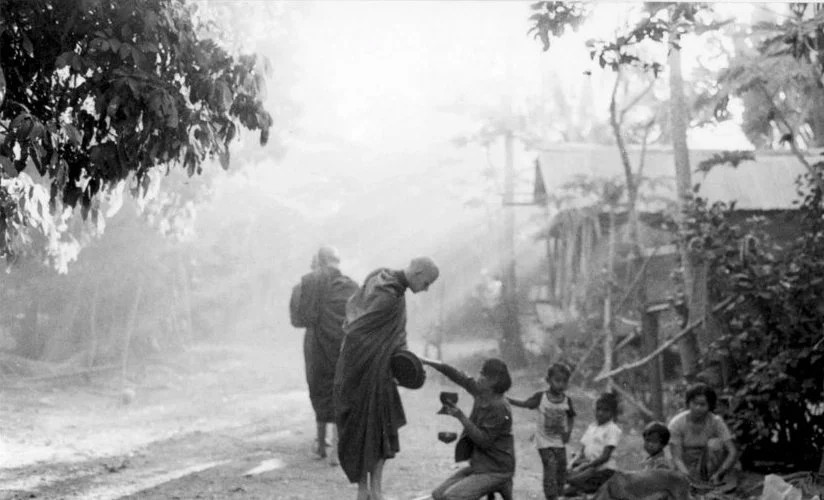
A funeral for a satin bowerbird at the end of a retreat.
The clothes we wear to bed at night to sleep is just pyjamas
This flesh we roam this earth in is a blessing, not a promise
I bow with those who bow to the creator and pay homage
— Jay Electronica, A.P.I.D.T.A
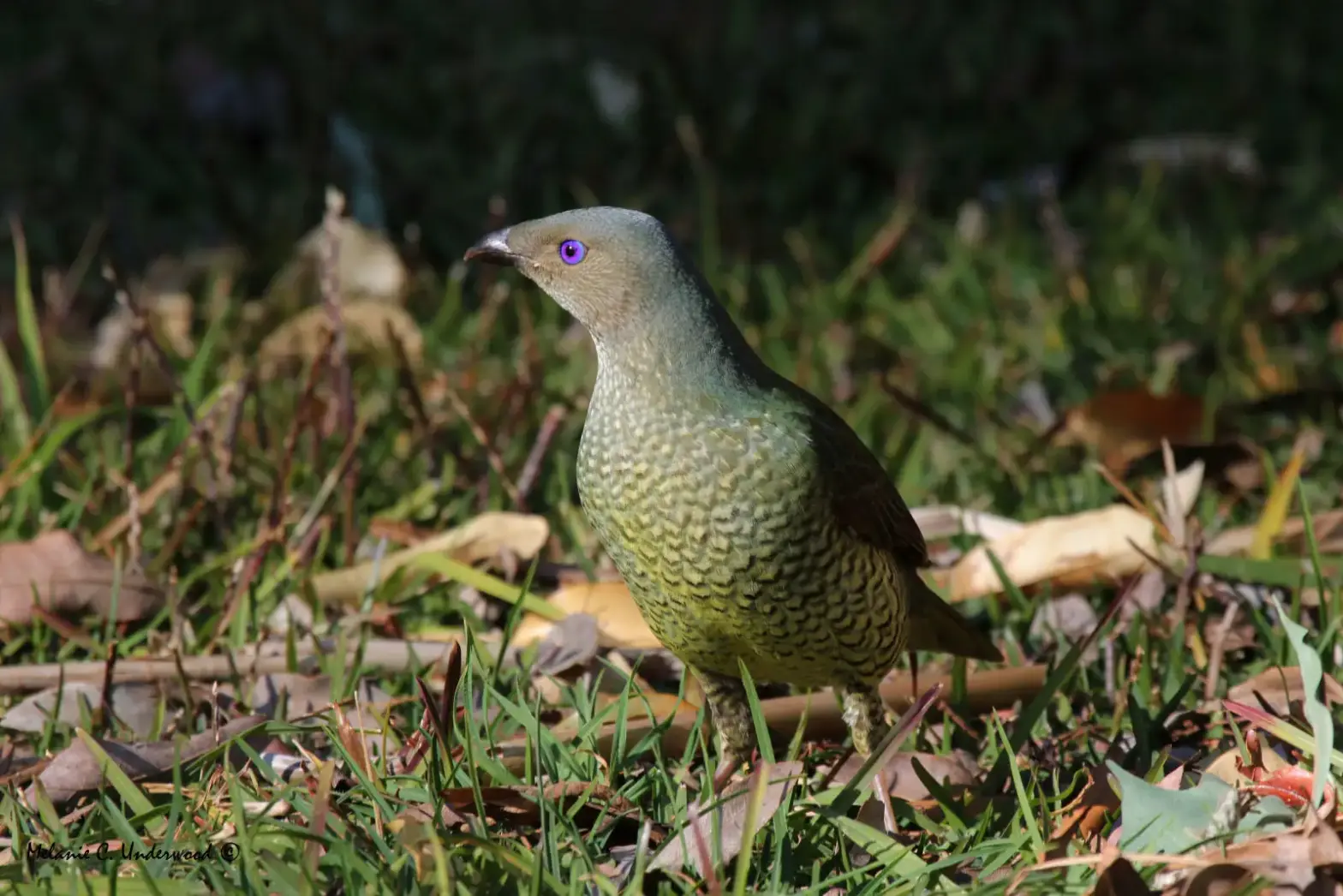
I hear a crash. Looking up from my tea, I walk over to the source of the sound. On the path outside the meditation hall is a female satin bowerbird. Having flown into one of the windows, she now lies twitching on the ground. I check if she is still alive. My heart races and my mind scatters. I think about what I need to do in each given scenario: if she is injured; dying; dead. When I see that she is badly injured I find my two close friends who are holding the retreat with me. We are all shaken up together. My thoughts go to the suffering that she might be in and what we can do to help alleviate that pain. One friend offers the wisdom that we let the wildness of nature unfold in its own way and only interfere when necessary. We hold this space of uncertainty as witnesses to the transition from life to death.
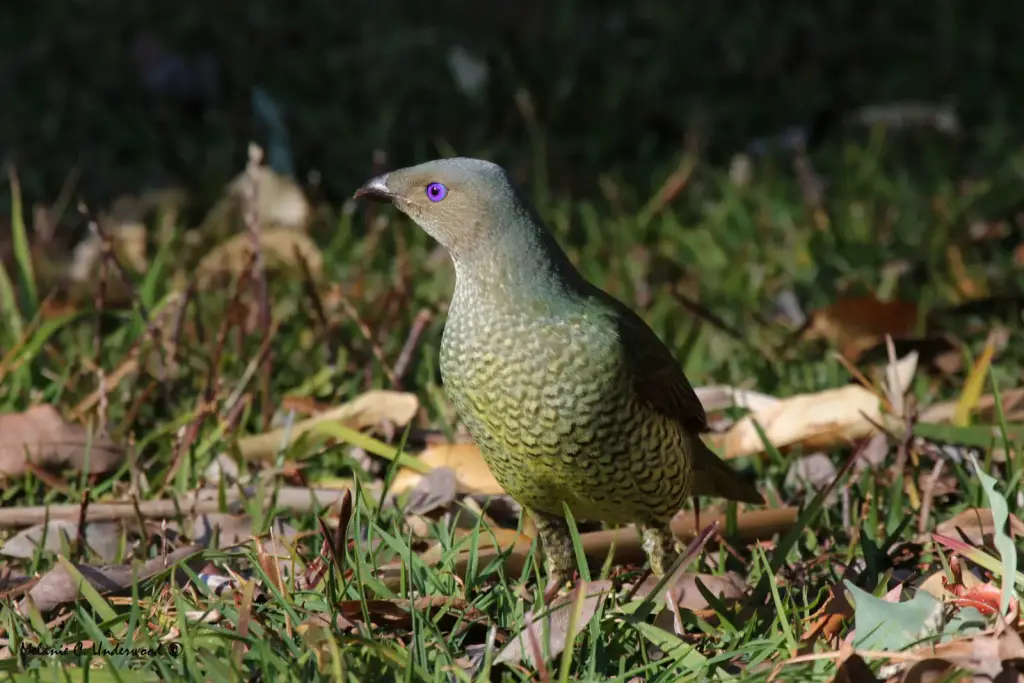
A female satin bowerbird (photo).
A memory arises of another speckled satin bowerbird peeking out at me from the broad leaves of a longan tree while I ate breakfast at a long silent retreat. At the time I felt like I had lost my way and the cheeky, monkey-like sounds of these birds felt like an invitation into the cosmic joke.
We go to move her away from the main building and realise she has died. She is so frail in my gloved hands. A delicate arrangement of green speckled feathers, a short beak, two dark eyes, two limp legs. It seems ridiculous that this creature was only minutes before creating a racket as she flew in and out of the plum tree, finding food and evading the retreatants who sought out her beauty. I feel a wave of sadness. As we close the retreat, I lead a guided mettā meditation where I invite everyone to sense into a love for the wildness of nature, for nature’s freedom. On listening back to the recording, I hear my voice crackling with my unfolding emotions, strained through my own sickness and weariness.
After the retreatants leave, the three of us hold a short funeral. We find a patch of land away from the main house where we can bury her and allow her to return to the earth. A rosella watches from a nearby tree, a witness to this sacred transition. I dig a hole and place her in the ground. She has become stiff and dense, seemingly already hardening into earth. The ants quickly move in to begin their work.
I’m nervous as I haven’t led a funeral before. I say a few words that a teacher passed on to me:
Let this bird’s life and death remind us of the preciousness of life.
Aniccā vata saṅkhārā.
All formations are impermanent.
I notice a peacefulness, an otherworldly quiet stillness. I recall seeing my partner’s grandmother moments before she died and moments after, and how I had noticed this same sacred stillness.
I’d always wondered when I heard that people go to a better place after they die. In this moment, I feel open to something more than an acceptance of death as fact, more than the promise of another life.
The birds have Buddha Nature.
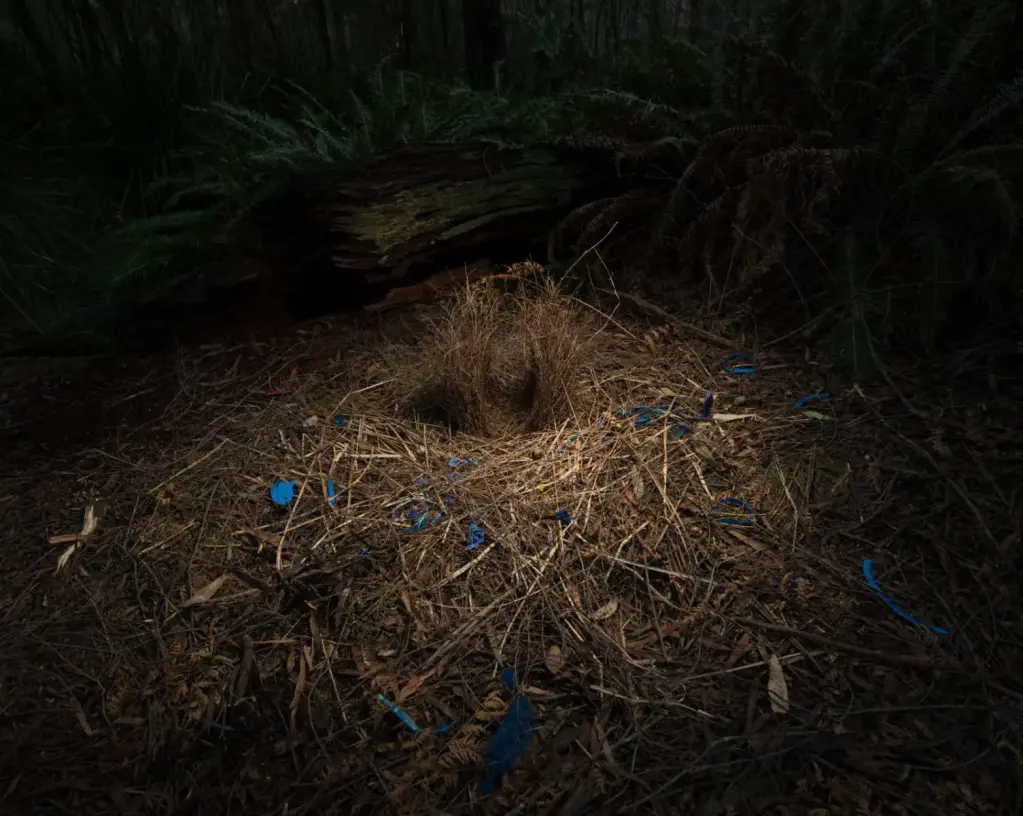
A bower (photo).
The death of the individual body doesn’t mean the end of us when we are “actualized by myriad things”, as Dōgen says.[^1] Yet we forget our connection to the divine, this great gift of life bestowed on us. We forget that we move and speak and dance as part of this great body, the total interdependence of all phenomena.
Each moment of life, each a step in the transition to death, is another opening to walk this path of great wisdom.
She is in the ground now. Somewhere nearby a male is still arranging his blue things — bottle caps, beetle wings, flowers — setting his stage, waiting.
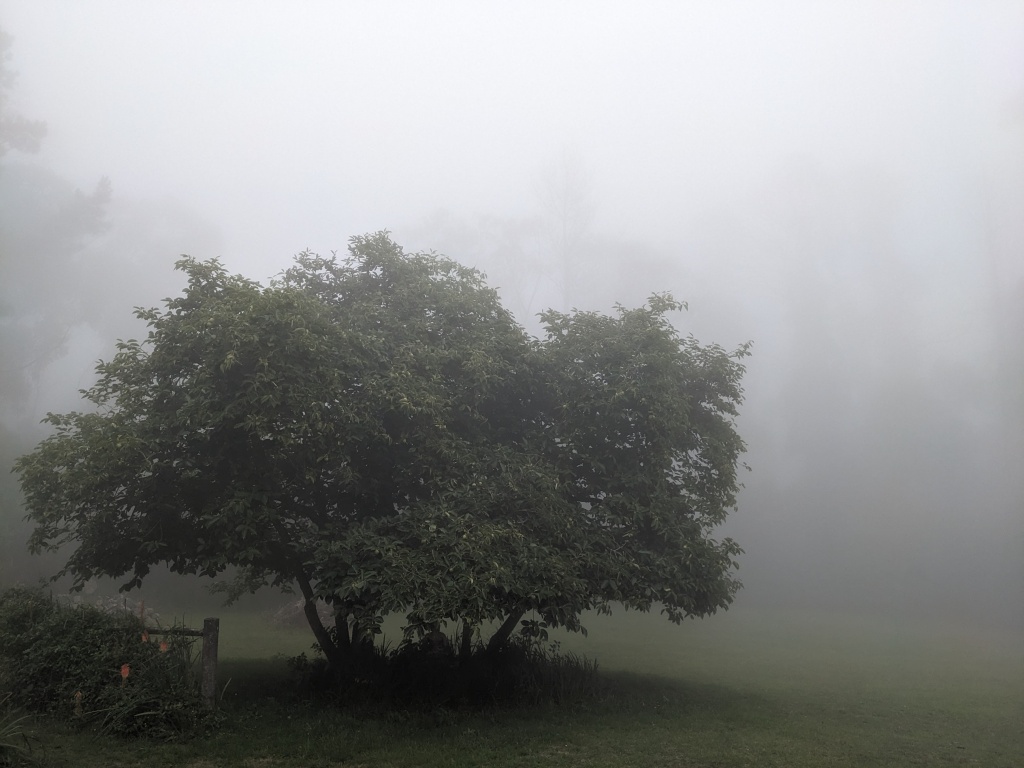
Vejjasala, our retreat home, shrouded in fog.
This song continues playing in my head and in my playlists, each time unravelling a little more.
I go to my Lord quietly, teardrops on our faces
Teardrops on my face, it’s like teardrops become waterfalls by the time they reach my laces
My eyelids is like levees but my tear ducts is like glaciers
As I contemplate creation, the salt that heals my wounds pour out my eyes just like libations
— Jay Electronica, A.P.I.D.T.A (listen)
[^1]: Dōgen, Genjōkōan: “To study the self is to forget the self. To forget the self is to be actualized by myriad things. When actualized by myriad things, your body and mind as well as the bodies and minds of others drop away.” Robert Aitken and Kazuaki Tanahashi’s translation is here.