Caring, Even for This

What if each meditation practice you did was an act of care? What if, no matter what came up, there was a tender, gentle presence? Can you care for aversion just as you care for love?

Practising care, all in your field are touched by this loving presence.

This caring presence itself turns towards experience. It greets the experience warmly and tenderly, like seeing an old friend, or as candlelight gently illuminates.

All is welcome — even bracing or resistance. Trying to control and manage experience is just what we do. Rather than a problem to be rid of, this too wants care and love. Ask “can I be with this?”

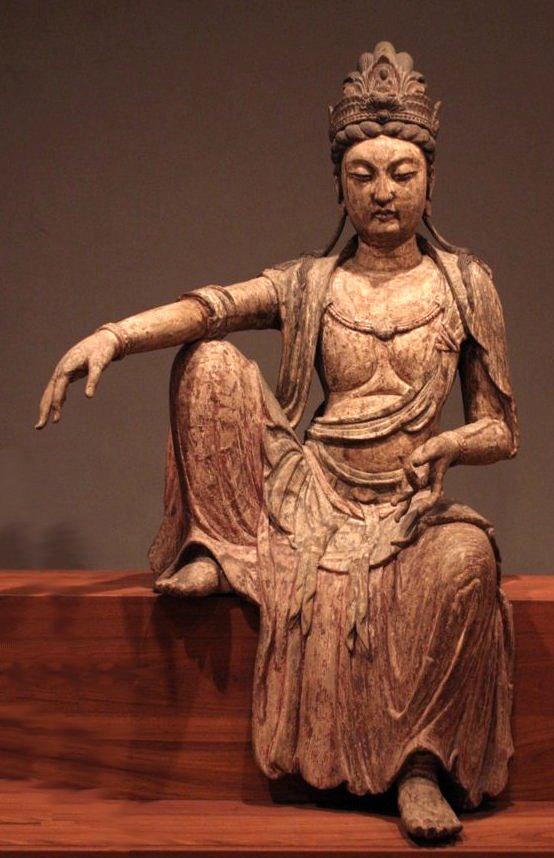
In difficult moments bring in the phrase: “may I hold this lightly.” You can also imagine yourself placing the difficulty next to you so you are sitting next to it. When called for, imagine the Buddha or Quan Yin as a figure of loving presence — giving you the capacity to be with and hold this tenderly.

The world offers itself to your imagination

Wild Geese by Mary Oliver

You do not have to be good.
You do not have to walk on your knees
for a hundred miles through the desert, repenting.
You only have to let the soft animal of your body
love what it loves.
Tell me about despair, yours, and I will tell you mine.
Meanwhile the world goes on.
Meanwhile the sun and the clear pebbles of the rain
are moving across the landscapes,
over the prairies and the deep trees,
the mountains and the rivers.
Meanwhile the wild geese, high in the clean blue air,
are heading home again.
Whoever you are, no matter how lonely,
the world offers itself to your imagination,
calls to you like the wild geese, harsh and exciting—
over and over announcing your place
in the family of things.

(emphasis mine)

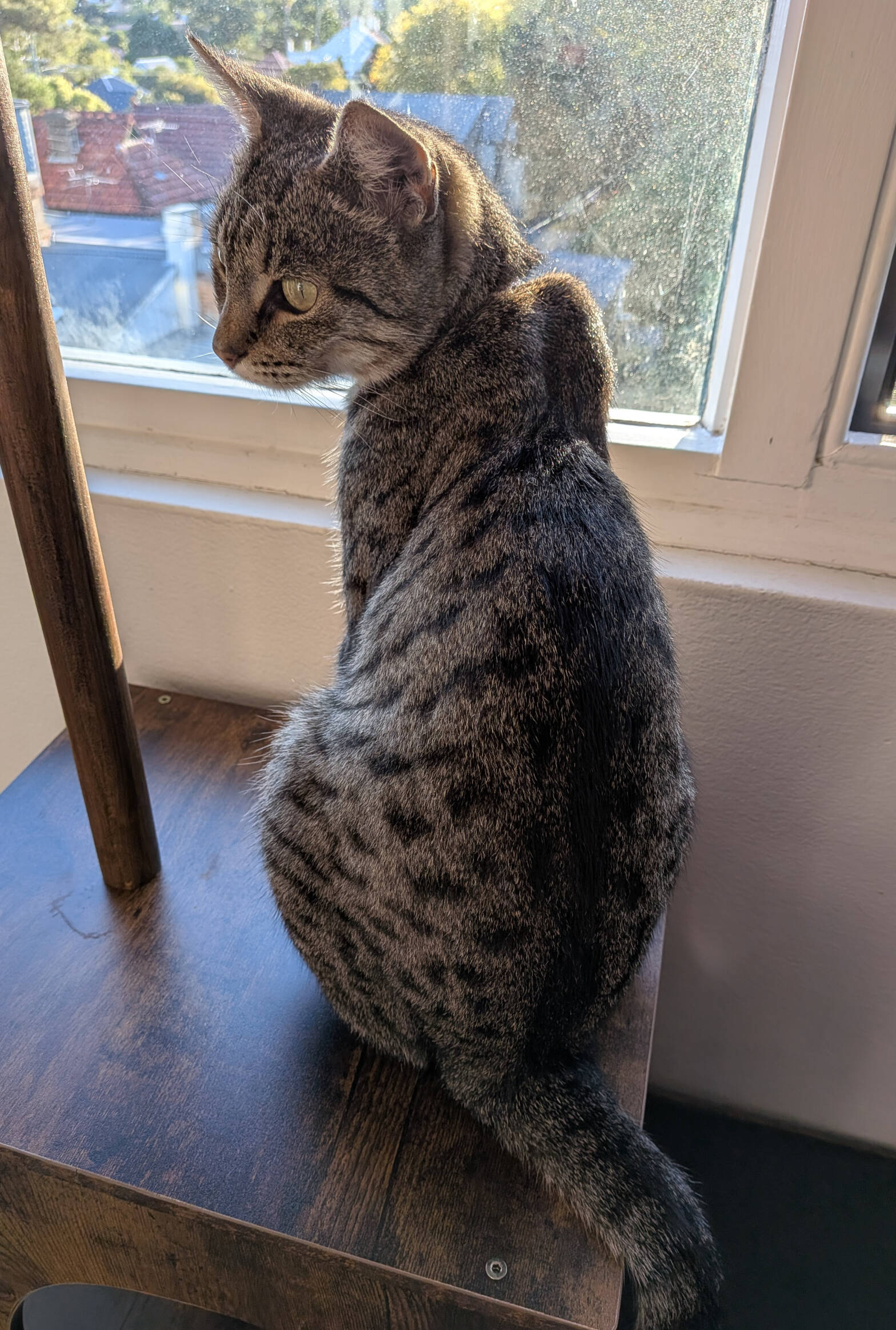
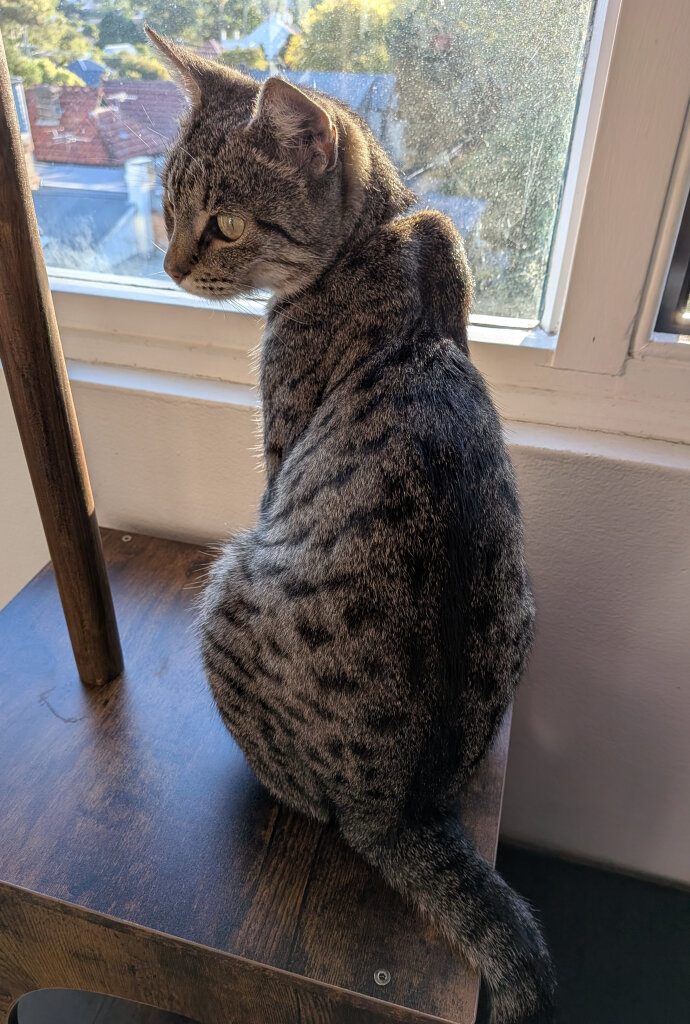
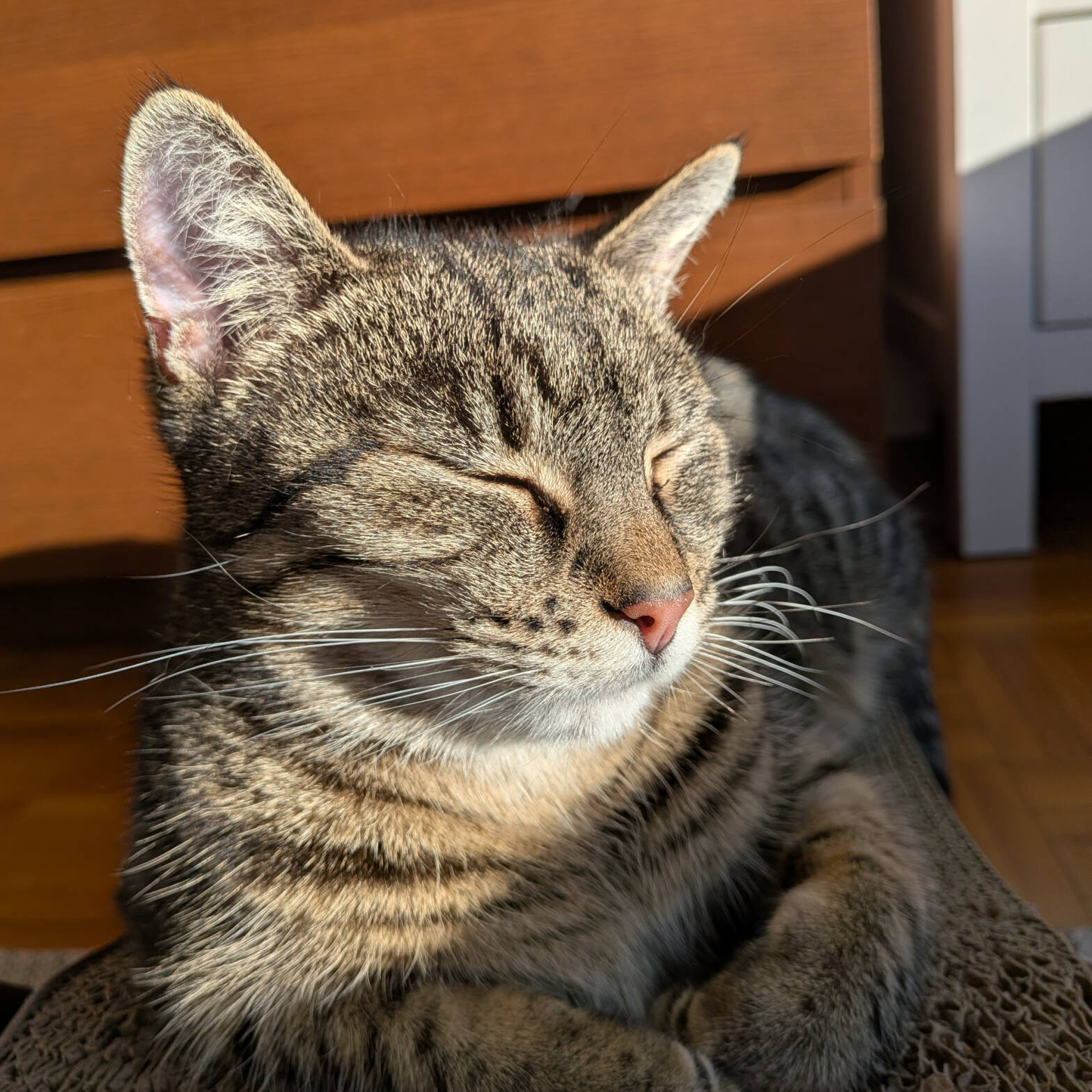
We adopted a cat five weeks ago. Her name is Mimi and we affectionately call her Memes. She celebrated her 1st birthday this week.

I wonder about her life. About her past as a stray on the street. About what she really thinks of this apartment and these two humans that are now her loving companions.

Mimi is vicious when pouncing on a bee soft toy; tender when snuggling to be brushed. She closes her eyes and nudges her head towards the window to smell the outside air. She perches on a shelf and watches us go about our busyness. I bow to her while blinking slowly, doing my best to communicate love and safety.

Since Mimi has come into our lives, I’m moved by her softness and the raw animal of her being. I’m touched by the divine aliveness that fills her graceful movements.

I’m humbled by this creature that depends on me to survive. I come across a reddit thread asking what to do in their cat’s last days. I know it’s likely I’ll outlive Mimi and be witness to her death. The sadness I feel is poignant and clarifying: I choose to move closer and to love her more even though it risks greater pain.

I sit quietly and consider this imaginally. Mimi offers herself to my imagination. The image of self, other, and world has shifted to include her. The threads of my life are now interweaving with Mimi’s. A new meaningfulness unfolds, felt but not named.

Where there is love there is image. When we open to something and find this sense of love, we can recognise that the imaginal is working away in the background, concocting a sense of things, finding our place in the world.

This is a different move from reducing suffering or letting go of clinging. Sometimes it also opens us to grief and pain — there is always that risk. What it promises in return is deep meaningfulness, found in the particulars: softly breathing curled up in a ball, meowing in excited greeting, yawning after a long nap.

The meditation workshop on Imaginal Practice I’m leading is coming up next week. If you feel the world offering itself to your imagination, come explore with me.

Uncle Chwan: A ghost monk

I never met my Uncle Chwan. I’ve only seen a small sepia-tinged photo of him on the altar at my Aunty’s house, next to photos of Ah Ma and Ah Kong, my paternal grandparents. The second youngest of eight siblings, he was kind and gentle. My Dad and Aunty talk of their little brother as the nice one of the family. I can sense the truth in this.

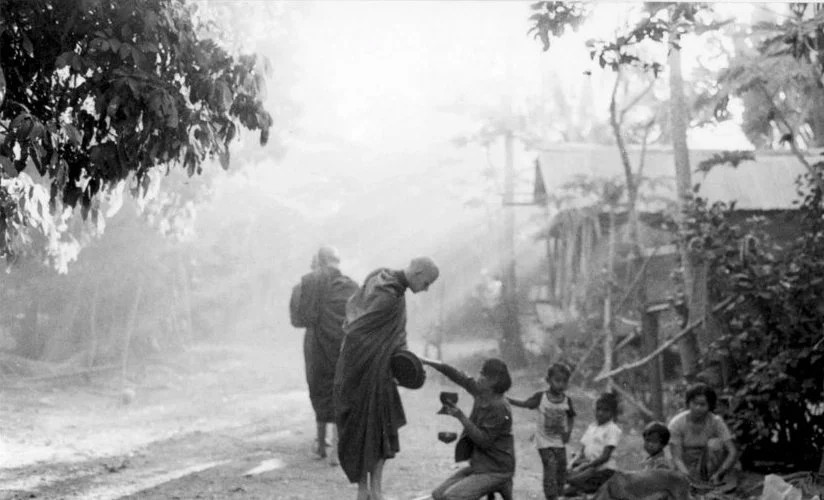
All eight of my Dad’s siblings moved from Malaysia to Australia to go to university. After graduating with an accounting degree, Uncle Chwan decided to become a Buddhist monk in the Thai Forest tradition. This was the time — the family was healthy and well, he’d finished his studies, and something called him to live a different life.

He travelled to Thailand to ordain in the Ajahn Chah lineage at Wat Pa Nanachat — known locally as the monastery for westerners. The details are cobbled together from stories I’ve heard from family and from a monk who was there at the time. To ordain he was required to arrive with few possessions and no money, taking motorbike rides through jungles, giving up everything he knew to live with strangers. He turned his life upside down at 24 for a chance to dedicate himself to something greater.

Uncle Chwan’s Dharma name was Nyanaviro in Pali — meaning “courageous in wisdom” or “one whose courage is knowledge”. This Thai Forest tradition is characterised by austere, relentless dedication to the path.

A couple of years after ordaining, Uncle Chwan became ill. The abbot of the monastery had encouraged the monks to be equanimous with their illnesses rather than seek medicine, a reticence to which Uncle Chwan was already inclined. When his illness got worse, he continued meditating in his kuti. After he didn’t come to the morning chanting and meditation, he was found dead by another monk.

It was incredibly rare for a monk to die so young. The monastery held a special ceremony and dozens of monks travelled from the surrounding towns to pay their respects. But almost all of my family couldn’t travel to such a remote place at that time. The cause of death was said to be encephalitis caused by malaria or rabies. If caught early, this could have been treated. Death by equanimity.

I’m haunted by his ghost. He first came to me in meditation cautiously, hesitantly. I was unsure of opening to this dimension and the image flickered and faded in turn.

Eventually I allowed the image to come. Uncle Chwan visits me — adorned in ochre robes, shaved head, thin-framed glasses. He sits by me. Sometimes he offers me a smile, or a gentle hand on my shoulder. I sense that he is always with me, a phrase I’d dismissed when hearing others talk about these presences. I feel held in a kind embrace, watched over. During a month-long retreat, I experienced so much pain and mental anguish that I felt close to giving in, but I continued on, comforted by his presence in my imaginal sangha. He sat among my field of support.

I can’t explain the tenderness and kindness I feel from this image. What I feel is love. I feel heartbreak. I feel a family that was shattered at his death and maybe never recovered. I feel both endless grief and limitless compassion. I break down into tears when I see his half-smile. I’m held in his Loving Presence.

In loving memory of Uncle Chwan and Kow Ee Poh.
Figures of Loving Presence

I stumbled into this practice when following a Tara Brach guided meditation. The instruction, distinct from other metta practices I’d done, was to bring forward the phrase “may I be held in Loving Presence”. Almost immediately I felt a sense of receiving love and compassion and of being held in a warm embrace. This feeling was accompanied by an image of my grandparents, Ah Ma and Ah Kong. I sensed that I was receiving this love from them, from this image, as a form of unconditional love. It was incredibly touching and nourishing — I felt deeply seen and known, cared for, and safe. By feeling into this image, I could receive in a different way, not solely coming from my own intention, but rather held in this whole field. Imaginal practice opens up the possibility of opening to these qualities in a deeply nourishing and healing way — allowing us to be held in Loving Presence. Here you will be invited to bring this phrase to mind and to allow any images that arise in response — people from your life like friends, family, partners; teachers of significant figures you have known; or mythical or iconic figures such as Quan Yin or the Buddha.

Image: wood carving of Kuan-yan (Guanyin) with Amitābha on its crown (c. 1025). Northern Song dynasty, China, Honolulu Museum of Arts.

Credit: By Haa900 – Own work, Public Domain, https://commons.wikimedia.org/w/index.php?curid=7146040