Archetypes of Self and Path

There is always an image at work in how we hold ourselves – running below the surface, shaping what we can do, what we can’t, what we even let ourselves want. This practice brings some of that into the light by trying on other images, one at a time, and noticing what stirs.

Settle. Let the mind rest into the whole of the body – steady, collected, unhurried. Tune into the texture and tonality of how you are right now. Then, one at a time, drop into each archetype like trying on a new coat in a mirror. Amplify it. Let it move into the body. Notice what resonates. Notice where something in you resists. Notice what surfaces. Each movement is its own kind of discovery.

The disciple – in reverential study of a tradition.
The artist – endlessly making, combining, evoking.
The outsider – inhabiting the in-betweens and the undercommons, outside of systems, speaking truth to power.

Each brings a quality of presence. Try them on. See what they make of you.

For further reflection, see Rob Burbea’s talk In Love with the Way.
Desire that Builds Worlds

There’s a kind of wanting that moves underneath the everyday wants. It flows like an underground river. This is deeper than the wanting that has an object – the next thing, the better version, the destination. A current. A yearning that animates us. Try as we might, it can’t be ignored.

To be human is to want. To want is, at times, to suffer – to take on the big creative project, to welcome another into the family, to move toward what we love knowing it may also break us. Many traditions offer ways out of this. This meditation moves the other direction: into desire, and then through it.

The practice has three movements.

First, set aside what you’ve been told about desire – that it’s the cause of suffering, that it’s un-spiritual, that it should be renounced. Let those teachings rest for the duration of this sit. Trust that desire is holding something important for you.

Second, find the wanting in your body. Let a particular desire come into focus, whatever it is. Then go further: under the surface want, what’s the deeper need? Under the need, what’s the yearning at the very core?

Third, when you’ve arrived at something true, open to it. Receive it in your whole body. Let it move through you as a current rather than as an idea or a problem to solve.

What’s discovered, met this way, is that the yearning was never really about lack. The quality we were reaching for is already here, already moving through us. The yearning reaches for itself.

The practice comes from Rob Burbea, whose talk Opening to the Current of Desire goes further into the territory.

Evoking the Imaginal Body

The body is already image, in the sense that our mind is always creating the sense of the body, holding a way of looking at the body that renders it a certain way. In this practice we intentionally bring in different images to notice what happens in the body space. Sitting as a mountain, as empty space, as a vast sky, or wrapped head to toe in fine cloth — each of these does something to the felt sense of the body, shifts or alters it in some way, even just subtly. Then we open to letting an image form, becoming receptive to whatever might appear in the mind, trusting the image as having meaning. This all points to the insight that images are always occurring and that the way we relate to the body and to image is always intertwined.

Calm Abiding with Curiosity and Openness

This practice plays in the space between samatha and imaginal practice. The unifying quality here is curiosity. This allows calm abiding practice to develop by making the meditation object more interesting and therefore easier to stay with. Curiosity also is key for opening to the imaginal and welcoming in imaginal senses and figures. Through first stabilising in the body and calming the mind, we can then release into a sense of trust, dropping into other depths of experience. Openness then becomes a key to reveal emptiness — that things are not as solid as they might initially seem, but instead are open to interpretation and ways of being perceived.

Figures of Loving Presence

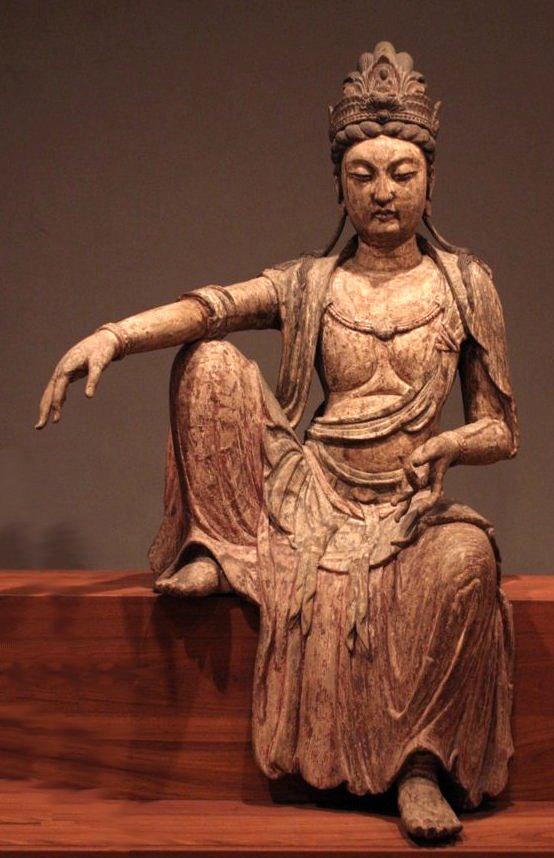
I stumbled into this practice when following a Tara Brach guided meditation. The instruction, distinct from other metta practices I’d done, was to bring forward the phrase “may I be held in Loving Presence”. Almost immediately I felt a sense of receiving love and compassion and of being held in a warm embrace. This feeling was accompanied by an image of my grandparents, Ah Ma and Ah Kong. I sensed that I was receiving this love from them, from this image, as a form of unconditional love. It was incredibly touching and nourishing — I felt deeply seen and known, cared for, and safe. By feeling into this image, I could receive in a different way, not solely coming from my own intention, but rather held in this whole field. Imaginal practice opens up the possibility of opening to these qualities in a deeply nourishing and healing way — allowing us to be held in Loving Presence. Here you will be invited to bring this phrase to mind and to allow any images that arise in response — people from your life like friends, family, partners; teachers of significant figures you have known; or mythical or iconic figures such as Quan Yin or the Buddha.

Image: wood carving of Kuan-yan (Guanyin) with Amitābha on its crown (c. 1025). Northern Song dynasty, China, Honolulu Museum of Arts.

Credit: By Haa900 – Own work, Public Domain, https://commons.wikimedia.org/w/index.php?curid=7146040

Opening the Imaginal Felt Sense of the Body

Images are always at play in the way we feel our body and make sense of our experience. In meditation practice we can bring in different images as a way of cultivating different ways of looking — each image shifts our relation with experience, opening new ways of being. In this practice, you will sit like a mountain: imperturbable, solid, unmoving. Then you will open to whole body awareness, tuning in to the felt sense of the whole field of feeling. By being in relation with this field, you come to see it as insubstantial, shifting, and open — like patterns of light, or a lava lamp. Finally you can bring in the image of sitting as Buddha-nature — clear, pristine awareness expressed through your body.