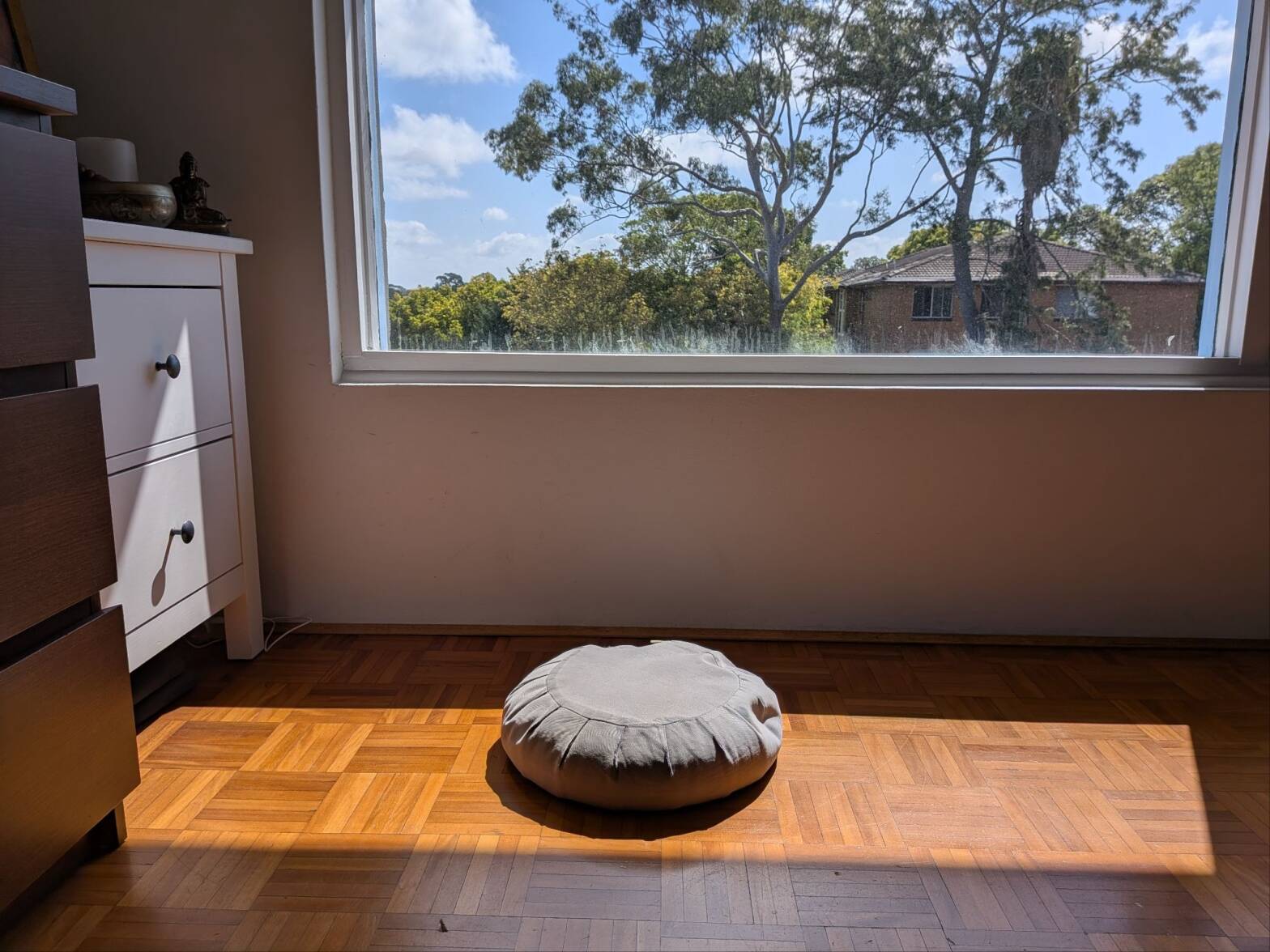
I’m sitting on the beige, scratchy carpet in the spare room of my unit in Maylands, a quaint-yet-growing suburb of Boorloo (Perth). I’m trying to meditate and have a growing sense of failure. I gaze at the light slowly crawling across the carpet. Restless and bored, I get up and do something else. Maybe meditation just isn’t for me.
Much earlier, I’m sitting on another carpet. This time I’m young, maybe nine years old, and Dad has offered to teach me to meditate. I’m thrilled, it’s all so mysterious to me. What happens when Dad goes off and sits quietly in the evenings? It could be anything! We sit on the floor in the front room of the house with the lights dim. Dad guides me to notice the sensations of my breath. I picture it like I’m watching an animation: breath coming into my body like flowing coloured lines moving through my nose, filling my lungs, then releasing on the exhale to rejoin the atmosphere. I enjoy the feeling of being calm, but I get sleepy straight away. I also feel like I’m somehow doing it wrong — I’m picturing something but it feels like I’m making it up, using my highly active imagination instead of doing it “properly.” Is this what meditation is meant to be? In the ensuing years I only meditate when in bed as something to do while waiting for my mind to drift off. I don’t recall us sitting together again.
I’m in a chair gazing over a busy Sydney street on a cloudy weekday afternoon. The recent move has been challenging and I’m in the middle of a spell of depression and anxiety. I can’t seem to break out of feeling this way through my usual methods and I’m starting to feel desperate. I come across a book: “The Mindful Way Through Depression.” While it sounds like it’s just what I need, I’m short of spoons and can’t summon the energy to get further than the title. Instead I read a short article online, remember yoga teachers talking about mindfulness, and try to do a practice. I bring my mind to the present moment sensations. I watch myself from a more objective viewpoint. I see myself drinking tea, walking up the stairs, feeling sad, obsessing about a stressful event. I watch a thought arise and pass and suddenly feel a freedom and relief I haven’t felt in ages: I don’t need to be so caught up. But this is only fleeting, fading away mere moments later. After I stop practising I’m right back to rumination. I know that if I could continue this mindfulness it would help but have no idea how to make it stick. It feels like I opened a doorway to a vast beautiful view that closed again in the blink of an eye. I have no idea what the key is to get the door open again, or to keep it open.
In each of these scenes, I felt like I had started school without books, anything to write with, or language to communicate with others. Without a framework and map, I got lost at every turn.
//
Once I got my head above water from the period of depression, anxiety, and burnout, I had a moment of insight. I realised that I needed to find some way of working with the mind. It was suddenly clear that my mind was turning an objectively good life situation into something miserable. I felt like I was stuck playing a cursed game that I had invented; I was trapped in a prison of my own creation. Something in how I was relating to experiences wasn’t working. I knew I needed something that would help me learn from these experiences.
A friend happened to give me a copy of the book The Mind Illuminated and I began practising consistently. I moved up and down the stages of The Elephant Path. The guidance I received in that book, combined with a few chats with more experienced practitioners, brought the practice to life. As I sat, I felt more calm and clear. I learned how my mind could so easily shift into criticism and place blame on myself, or feel responsible for things I couldn’t control, such as a moment of distraction. I saw, moment-by-moment, how my mind constructed this prison.
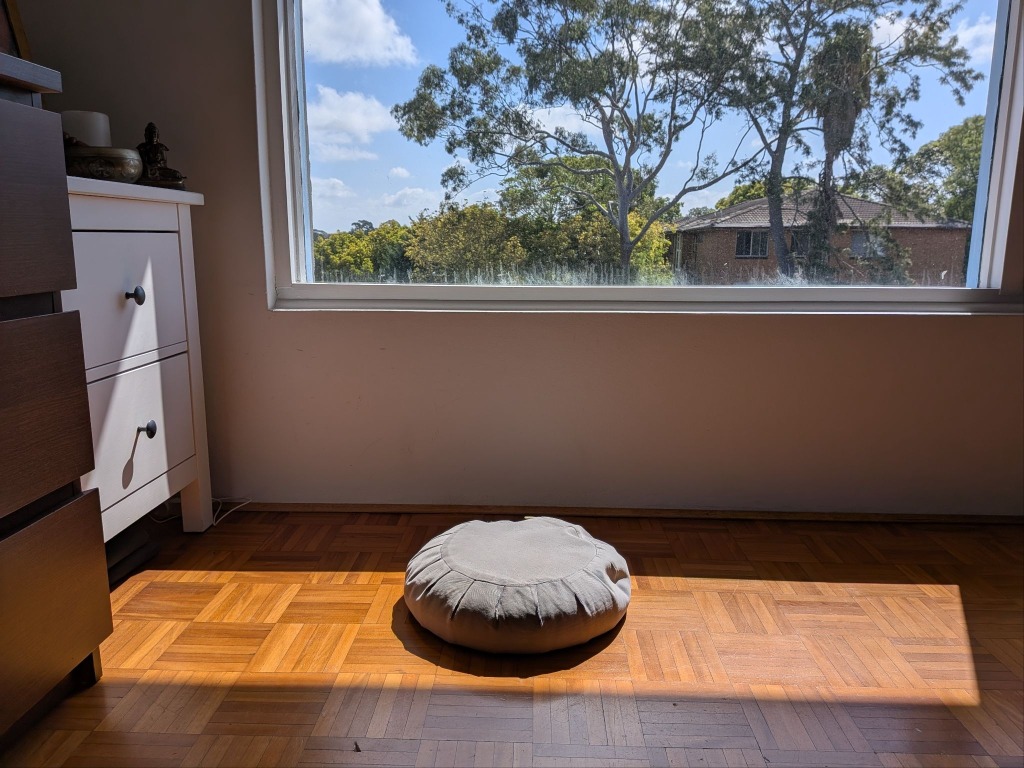
One morning a few months later I’m sitting on a cushion, this time on parquet flooring. I observe the sensations of the body and the breath. I watch thoughts about my unfinished thesis chapter, what to cook for dinner, an idea for an artwork. There’s a gentle sense of calm and comfort. The bell goes off after 45 minutes and I open my eyes to a soft light angled in through the apartment window. I take a moment to appreciate the warmth of the rays in the cool air. I realise that I’m just…fine. It’s another day and my mind isn’t a bad place to be.
Over the months that followed, I knew that I’d never experience the same difficulty with anxiety and depression. Each day, each week, I noticed the patterns of the mind and saw how intention and attention shaped my world.
//
Looking back, it became clear that I was lucky to find a foundational practice that helped make meditation not only function, but also to feel good. The Buddha said that practice should be “good at the beginning, good in the middle, good at the end.” That on its own is a vast beautiful view and a doorway worth opening.
I’m delighted to go back to my roots and to bring this practice to life through a full-day of exploration on the 8th of March. Come join me : )
With mettā,
Kynan