The Unfindable Self

A chariot cannot be said to be different from its parts;
it is not identical with the parts,
nor does it possess the parts.

– Chandrakirti, Madhyamakāvatāra 6.151

Look for the self the way you’d look for the chariot.

First, call it up. Recall something from today and notice where you held on – this is me, this is mine. Or picture yourself sitting across from you, as in a mirror. Or imagine someone pointing at you and shouting, thief! Something rises to defend. What is it protecting?

Notice how it feels. Continuous. Solid. Standing on its own.

If a self like that were real, you could find it. So search.

Start with sound. Is the bird song you? The hum of the fridge? Then the body: pressure, warmth, the texture of your clothes, the tightness in the shoulder. Then feeling. Call up a little joy, a little sadness. If you were a feeling, which one would you be? Then thought, and the narrator, and whoever the narrator is talking to.

Is there anywhere else to look?

Take each layer slowly, until you’re certain.

Where the self appeared to be, a spaciousness. Rest there.

The self comes back, like a rainbow. Vividly appearing.
Unhooking the Self-sense

Whatever is not yours, let go of it.
Your letting go of it will lead to your welfare and happiness for a long time.

– Alagaddūpama Sutta, MN 22

Not me. Not mine. Uncontrollable.

Take up a lens that sees all experience as not-self.

Start with sound. Sounds are just happening – you don’t get much say in them. Listen to the whole soundscape at once, and touch it with the phrase, lightly, like brushing it with a feather.

Then the breath. If you were the breath, which breath would you be? This one? The next one?

Then feeling, the texture of what is felt. Then thought. You didn’t decide for the next thought to be there. It comes from everywhere.

Then turn toward the one meditating. The thinker, the observer, the one sensing. Where is that? How do you actually experience it?

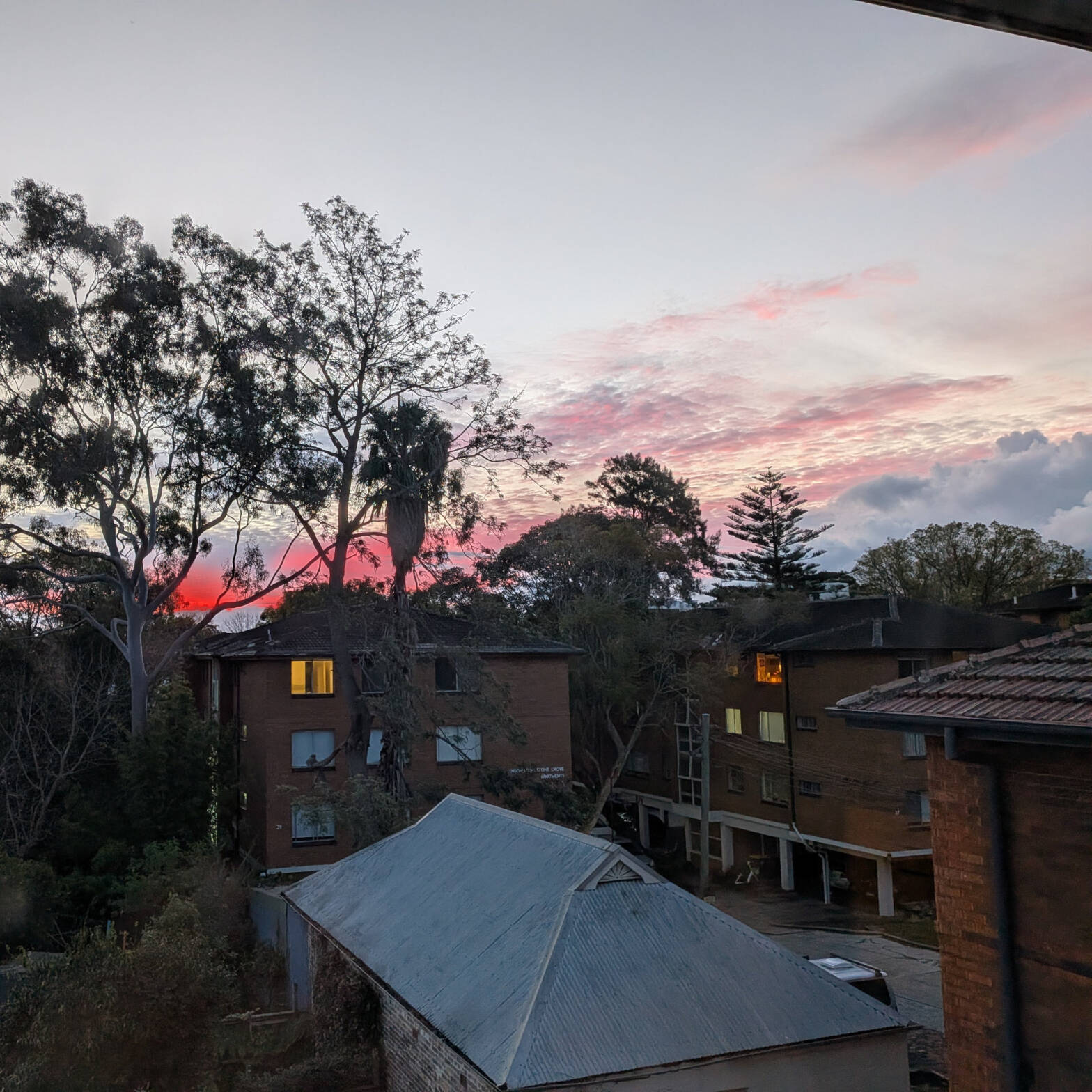
A sunset. Vividly appearing, and you can’t hold onto it. Unhook, and notice what this way of looking does.

There is still knowing, bright and clear. Open the eyes, and notice what things look like now.

Personality, Haphazardly Assembled

No one lives his life.
Disguised since childhood,
haphazardly assembled
from voices and fears and little pleasures,
we come of age as masks.
Our true face never speaks.

– Rainer Maria Rilke

Before you sit, grab a pen and write down your qualities and roles. Kind, caring, prickly, pedantic. Teacher, parent, neighbour. The ones you have applied to yourself, and the ones that have been applied to you. Then place the list to the side.

Settle. Let the whole body hang off the skeleton, filled with bright awareness. Tune into the gaps, the little space between the sensations, between the thoughts, between the feelings.

What is your sense of self right now? Maybe a thought. Maybe a density, a contraction. Maybe an image of yourself meditating.

Glance at the list. Are you being those things right now? Are you being caring? Are you being a friend?

They vividly appear. Yet there’s no core you can find that really is that.

Unhook. Put it to the side, and notice what happens.

The Ship of Theseus

A wooden chair on a bonfire. Flames lap at the frame, a leg falls into the ash, then the whole frame collapses. At what point is it no longer a chair?

Settle first. Let the body be heavy and relaxed, filled with bright awareness. Then bring forward your usual sense of self. Where do you locate it? Behind the eyes, in the heart, somewhere just above the body?

Now, lightly, as an experiment, let your right leg vanish into open space and be replaced by a whole new one. Then the left. The arms. The heart. An eye of a different colour. Half the brain, then all of it. Are you still you?

Where exactly are you?