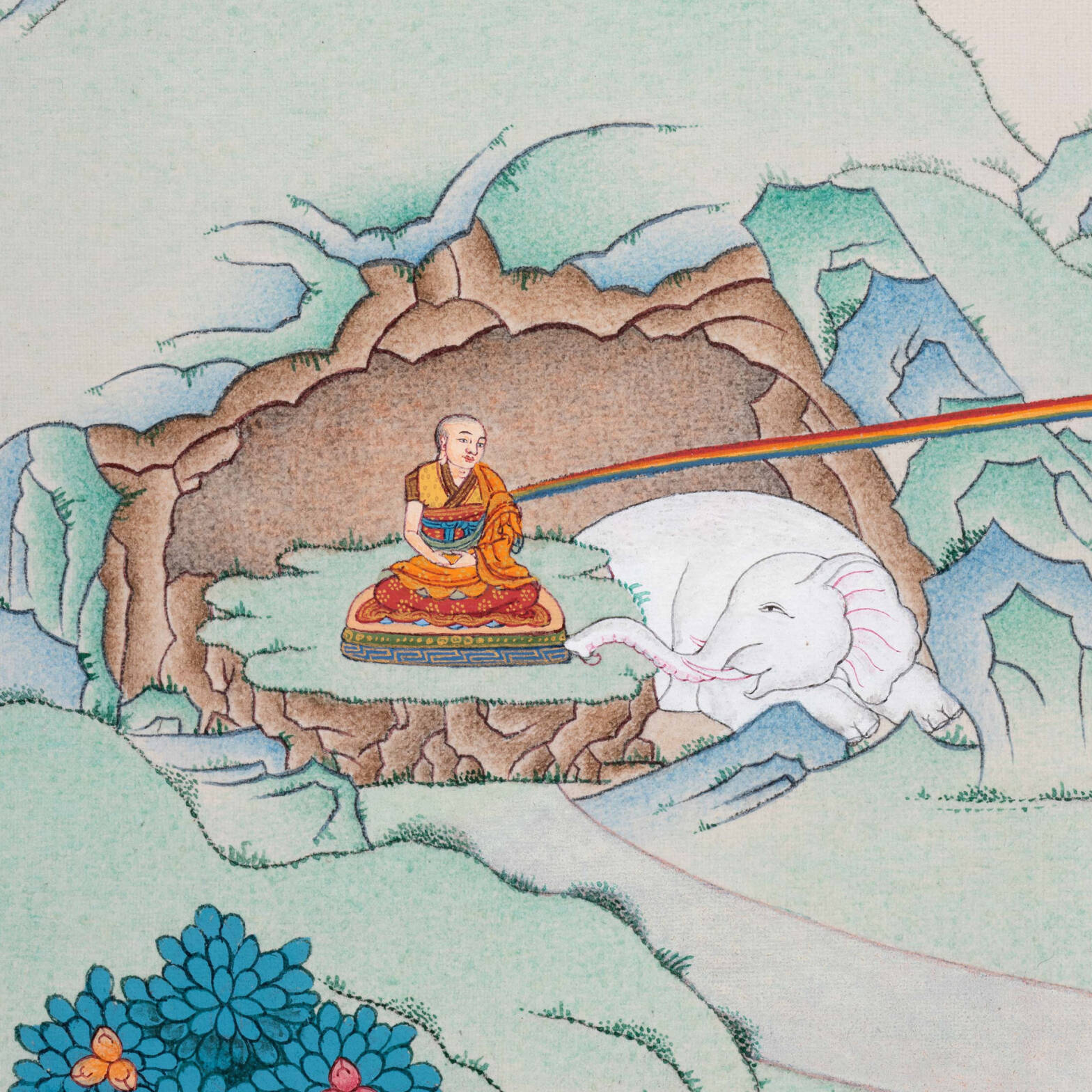
The Elephant Path is an ancient meditation teaching, believed to be a transmission from the Buddha-to-be Maitreya and written out by Asanga in around 500 CE. It describes the Nine Stages of Calm Abiding — a map of how experience shifts as the mind deepens in meditation. In this meditation, we traverse all the stages, using the appropriate antidotes and techniques at each stage to progress to the next. Through this we move from scattered monkey mind all the way to effortlessly stable attention. By practising The Elephant Path, you learn how to navigate the mind and how to cultivate different states of mind. This makes the mind a nice place to be — not only from landing in calm and clarity, but also from the confidence of knowing how to move the mind appropriately to whatever is present at any given moment.
Tag: right effort
Spaciousness with Stability
The practice of calm abiding culminates in effortlessly stable attention — you sit and focus, returning again and again, until it becomes automatic. There’s also a way to begin with effortlessness. Start by opening to effortless spacious awareness. Release the body and mind. Drop all effort, relax to the max, give up. Rest as the awareness that is already here and knowing. From that place of spacious ease, gently intend to care about the body. Through just the slightest intention, the body appears brightly and vividly in the foreground. Attention is stable without tension nor doing. Let go of everything and rest into the body.
Easing Into Effortless Calm Abiding
The path of calm abiding leads to effortlessly stable attention with equanimity and tranquility. A key to this part of practice is first building up to complete staying and then, when the time is right, easing up in effort. This easing up is a releasing, softening, and relaxing in such a way that the practice starts to flow by itself. Because of all the work done to establish stable attention and bright metacognitive awareness, the mind can, with only the slightest intention, rest into the body. This occurs at stage seven of the elephant path. You will ease up gradually, bit-by-bit, noticing if distractions again interrupt your continuity. When this works, it feels like the less you do the more focused you become, that there is no difference between meditation and non-meditation, and that there is a profound background stillness.
Calm Abiding with Whole Body Breathing
This practice uses the breath in the whole body as a technique to lead to completely staying with the meditation object. In the Stages of Samatha, the transition from Stage 5 to Stage 6 is accomplished through bringing more curiosity (intensifying) until there is an increase in sensory clarity. This then allows for *complete staying* with the meditation object, where there is exclusive attention that no longer scatters or alternates to distractions. Here we use the whole body as the meditation object and then notice the subtle level of sensation, then opening to noticing the breath through the whole body. This leads to a quality of engagement and interest where the body is seen as rich and complex, often becoming a cloud of sensation or waves of energy rather than something solid and fixed. Practising at this level cultivates more calm and clarity than is commonly though possible — the mind becomes both more at ease and brighter than in typical conscious experience.
Balancing Effort

Effort is a key aspect of meditation practice. Too much effort and the practice becomes tight and frustrating; too little effort and practice becomes slack and directionless. Progress, especially in calm abiding (śamatha) practice, is greatly aided by finding the right balance. In the Elephant Path, this is done through phases of intensifying, where more curiosity is brought in and the meditation object is engaged with more and more, then phases where the practice becomes about easing up until a balance is reached. This practice explores alternating between strong effort and ease, gradually settling into an eased up effort that is both calm and clear. The possibility of continued practice is effortless effort — where the mind stays with the meditation object just through the slightest intention and everything arises and ceases brightly and clearly, without any doing or paying attention whatsoever.