I stumbled into this practice when following a Tara Brach guided meditation. The instruction, distinct from other metta practices I’d done, was to bring forward the phrase “may I be held in Loving Presence”. Almost immediately I felt a sense of receiving love and compassion and of being held in a warm embrace. This feeling was accompanied by an image of my grandparents, Ah Ma and Ah Kong. I sensed that I was receiving this love from them, from this image, as a form of unconditional love. It was incredibly touching and nourishing — I felt deeply seen and known, cared for, and safe. By feeling into this image, I could receive in a different way, not solely coming from my own intention, but rather held in this whole field. Imaginal practice opens up the possibility of opening to these qualities in a deeply nourishing and healing way — allowing us to be held in Loving Presence. Here you will be invited to bring this phrase to mind and to allow any images that arise in response — people from your life like friends, family, partners; teachers of significant figures you have known; or mythical or iconic figures such as Quan Yin or the Buddha.
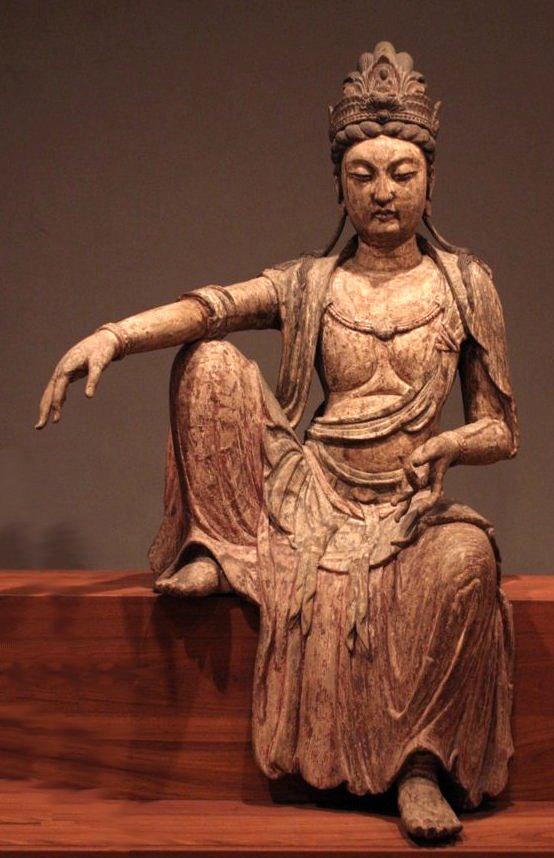
Image: wood carving of Kuan-yan (Guanyin) with Amitābha on its crown (c. 1025). Northern Song dynasty, China, Honolulu Museum of Arts.
Credit: By Haa900 – Own work, Public Domain, https://commons.wikimedia.org/w/index.php?curid=7146040