Someone I loved once gave me a box full of darkness.
It took me years to understand that this, too, was a gift.
— Mary Oliver
We learn early to feel the good emotions and put the rest away, so that we are easy to be around. Fear, anger, sadness — set aside, the lid held down.
Here we lift the lid. From a ground of stillness — the weight of the body, the breath, somewhere in you that feels stable — we turn towards a feeling we would rather not feel. Not somewhere safe, exactly. Somewhere brave enough to feel it.
Evoke a scene. Recall a memory. Let the feeling come, and let it be here — not pushed away, not acted out, but received as a signal, something deep in you speaking for a reason not yet clear.
Then look closely. Where does it live in the body — warmth, pressure, weight? Notice it is already changing. Search for the anger, the sadness, the fear itself, and find only sensation, shifting. Search for the one who feels it, and find no one there.
Happiness, love, delight. Don’t hold back — let one of them in. Recall the feeling in the body and give yourself permission to feel it fully.
Bring a scene to mind, remembered or imagined — the delight of slowly making coffee, the easy company of a friend — and let it carry the feeling forward. Take a deeper breath. Can I be with this?
Now look closely. Start with the sensations — where there’s warmth, lightness, an upwelling of energy — and notice they won’t hold still. They are already shifting, patterns of light dancing on water. Give the feeling its name, happiness or contentment, then search for the thing the name belongs to. You can feel it moving through you, but you can’t land on anything solid. Look for the one who feels it. Only more shifting sensation, a sense of density that also can’t quite be found.
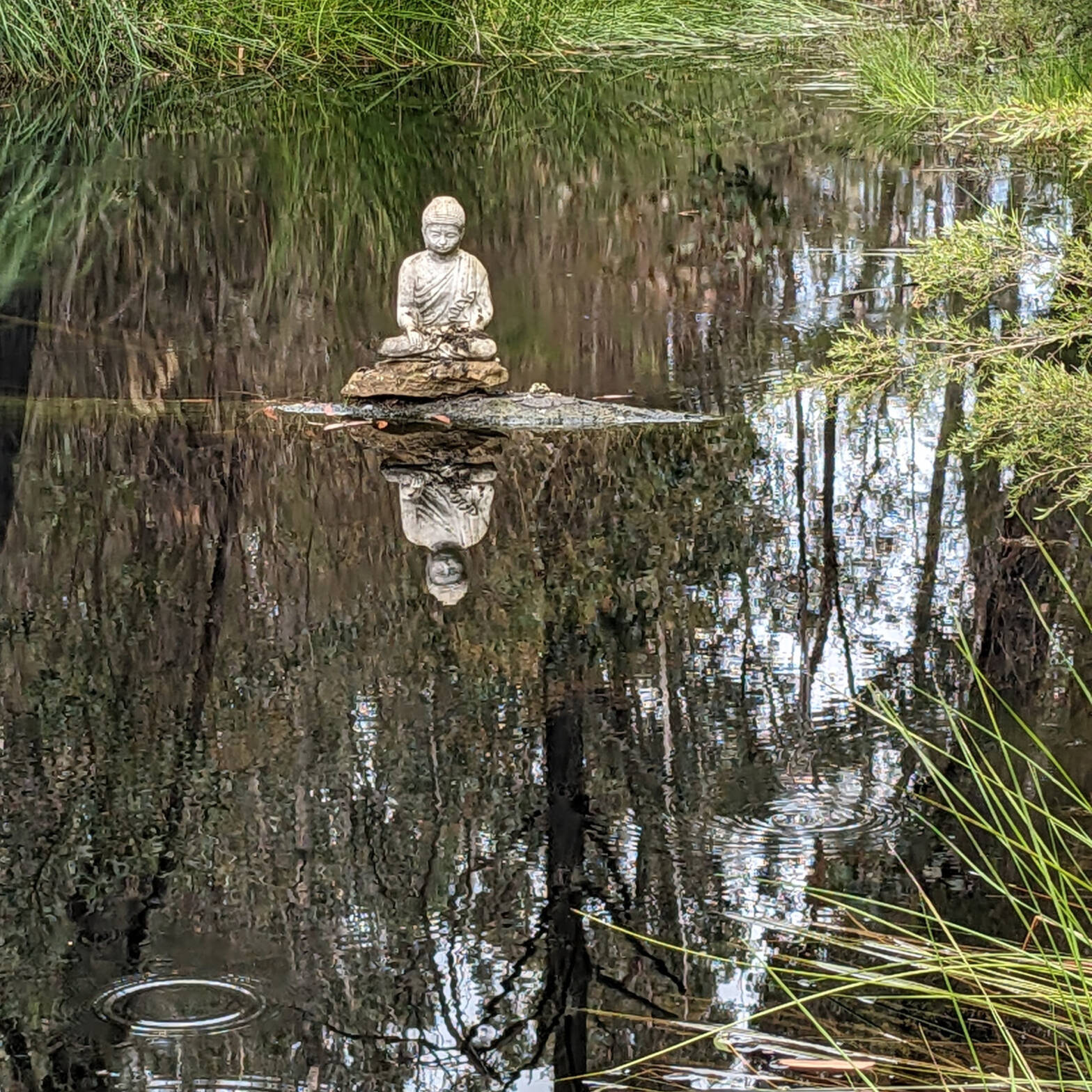
What remains is simply presence — a knowing beneath the feeling. Here you can rest. The feeling doesn’t need anything from you but to be known. Let it move through, like light dancing on the surface of a pond.
How I learned to attune to me protective and judgemental parts
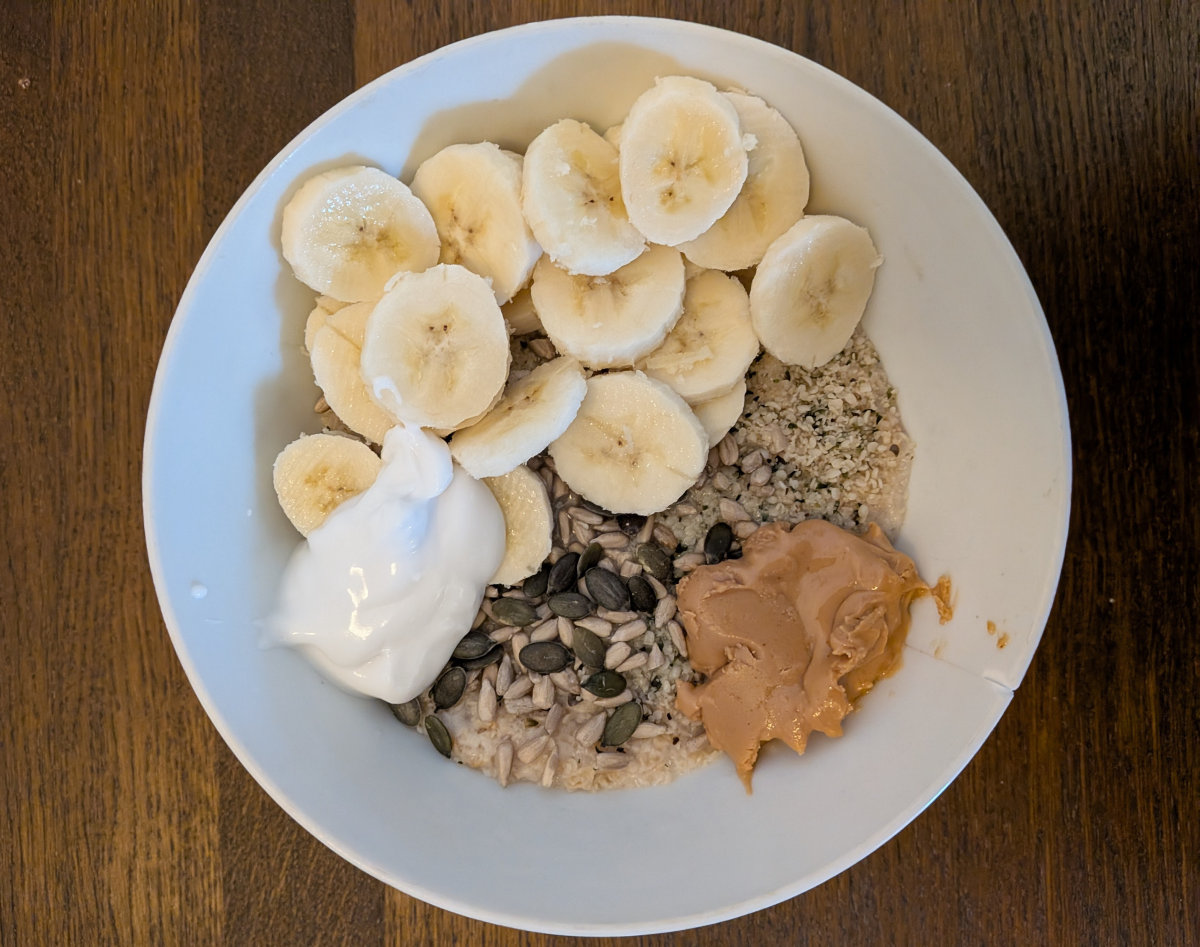
Recalling a time on solo silent retreat… I’m sitting on the sofa in my friend’s apartment, with full-length windows opening onto the balcony and the coolness of the winter air penetrated by rays of sun. Breakfast is oats, topped with peanut butter, banana, and coconut yoghurt, a favourite of mine. I take a moment to appreciate the scene, then go to finish eating quickly, feeling a sudden hurried pull. I get up with the thought ringing out in my head that I had somehow “done breakfast wrong.” I get back to meditating and trying to make the most of the retreat time.
Later that day, I’m practising walking meditation up and down the long corridor. The apartment is still and quiet; there’s barely a sound from the surrounding inhabitants. I step slowly on the carpet. My external world is calm and serene; my internal world is turbulent and chaotic as I start getting caught up in thoughts and emotions. Memories come to mind of times in my life when I felt like I didn’t act as well as I could. I start feeling a sense of guilt and shame. My mind seems to be gaining momentum in the way it presents these to me — one after the other, memory after memory. I see myself acting in an unkind way to others, failing to know things, falling short of the mark. It’s like my mind has taken the role of prosecutor and is presenting evidence at a trial to prove I’m a bad person. I can see a caricature of the proceedings: the lawyer holds up a memory for the courtroom to see, saying, “Here we have Exhibit A demonstrating just how unkind and uncaring Kynan is.” I see myself on retreat as the defendant, with no chance to speak.
I’d known a sense of self-judgement in everyday life as the driving force that pushes me both to do things well and to get things done. But the intensity and constancy of this experience surprise me. I realise how much I normally try to avoid or placate this pattern of criticism — either by turning my attention away, or by attempting to appease this part through trying as hard as I can. I’m also on retreat, so it’s not clear what I should do better to really succeed at breakfast, or how I can improve upon these memories of the past. I recall my colleague Upali telling me “everything that happens on retreat is good,” but I can’t find a way to fold this into that saying. The barrage continues. It seems genuinely bad and I feel like I’m actually a bad person. There’s a continual sense of pressure and frustration.
As the hours continue, I’m crushed under the weight of this sense of not being good enough. I do what I can to be mindful of the sensations and unpleasant feeling tone. The avalanche continues picking up speed, leaving me a wreck as the night draws on. I try skilful ignoring. Paying attention to the breath feels hopeless; investigating the sensations impossible. I curl up into a ball.
Then another memory surfaces: I’m ten years old and going to my very first extension class after being selected to represent my school. I’m so excited — I get whisked away to another school to meet other kids like me, hopeful to make some new friends. In the first class we do a science experiment — placing Smarties in a dish of water and observing the time it takes for the colours to spread and blend into new shades. In the excitement, I barely write anything down; at the end of the class they ask us to hand in our report. I quickly jot down a few notes and put my piece of paper in the pile on the teacher’s desk.
The next week I’m back at the class and the teacher has a stern look. The first thing they do is make sure everyone is listening. Then they hold up a piece of paper. I recoil – it’s my report from the last class. They say that this is inappropriate, unacceptable; this work is simply not good enough. My heart sinks. I’ve never felt so embarrassed and ashamed. I collect my piece of paper. I’m crushed. I never tell my parents, or anyone. I continue with the class, but I’m just going through the motions. The spark has been lost.
I internally vow to never let this happen again. I make sure that anytime there’s something to do, anything that might be judged or assessed, it will be done well enough that I won’t have to feel this way. This is a big job that part of me takes on: to always be good. To push myself so that I won’t be caught out by others.
Seeing this memory has a different feeling. I stop trying to observe the sensations from a distance and fully embrace the felt experience with compassion. My heart opens for this younger self. I sit with him and hear his frustrations. I recognise that bright-eyed ten-year-old and can see that he was just trying his best. It was at best an honest mistake, and at worst he was set up to fail by the adults who expected things without giving clear instruction or support. It’s clear that he didn’t deserve that, and I don’t deserve that. I hold these feelings, lovingly attuning to all this pain and difficulty.
Suddenly I can tune into why there’s such a strong sense of wanting to do things well. I see how this part of me pushes to do well to avoid feeling embarrassed and ashamed. This part of me formed to prevent this hurt. It uses internal criticism to never be caught out. It believes that I need to always be striving to do better to live up to some unreachable standard. I can see how hard this part is working. I feel its pain and exhaustion — all alone in this endless battle to always be better. I understand why it believes this is the only way forward. I feel a tenderness and warmth towards this part of me.
The lawyer, the inner critic, eating my breakfast wrong — all the same movement of protection. Each a pattern of trying to pre-emptively do something better in order to not feel judged, hurt, or attacked later. This part of me just wants to be seen and understood, to know that it isn’t alone. I offer appreciation for how hard it has been working for me. The part, previously so hard and jagged, softens and melts. The intense self-criticism shifts into understanding. I offer kindness and love to this part of me, welcoming it when it arises, appreciating its good intentions. With this, a long-neglected aspect of my being moves towards integration. I feel the spark of being alive and playful return, even if just to enjoy my breakfast and kick my legs as I sit in the sun.
I found my way through this by accident, while suffering more than I needed to. I wish I’d had a map of how to meet my parts through relationship. In the upcoming Liberating Feelings online workshop we’ll explore together how to bring the relational dimension of parts work into meditation.
The Buddha asked his monks: What happens when you drop a spoonful of salt into a glass of water? It turns undrinkable. How about the same spoonful into the Ganges? You can’t taste the salt at all.
This is something awareness can do. Open it wide enough and there is room for anything: the leftover charge of the day, an emotion you’d rather not feel, a discomfort you’ve been carrying since this morning. Nothing has to be solved. Held in a space this big, the feeling diffuses and shifts on its own. Awareness itself does the holding, with warmth and tenderness.
Begin with sound. Listen for the most distant noise, then notice the field that holds it — open, roomy, extending in every direction. Let the body appear inside that field. Then gently let whatever you are feeling come forward to be met.
Stay with it, and the feeling loosens. Where you thought there was a solid thing — sadness, or fear — you find movement, a shifting texture. Look for the one who is feeling it, and that too can’t quite be found.
What’s left is spacious knowing. Let the feeling move through it like a ripple through water.
It’s late, you’re winding down, and a notification arrives on your phone. Nothing serious. But there’s a flicker of irritation, a small charge moving through the body against the quiet you were just resting in.
The nervous system is always moving like this — across a spectrum of activation and rest, energy and ease. All of it is good. The charge that sets a boundary, the rest that restores, even the freeze that was once trying to keep you safe: each has its place, just as every part of the mind does. When nothing blocks the way, the system regulates itself. It rises into activation and on its own it settles again.
In this practice we bring a little activation in on purpose, in order to watch it shift and settle. Swing the arms for a minute, then stop. Feel the warmth, the quickened heart, the breath. Notice what happens as you pause and get out of the way.
Then bring something to mind — something small and irritating, an email you didn’t want, whatever brought a bit of feeling. Hold it in whole body awareness and tune into how it feels for you. Stay with the heart, the breath, the charge, with no need to change a thing.
I will face my fear. I will permit it to pass over me and through me. And when it has gone past I will turn the inner eye to see its path. Where the fear has gone there will be nothing. Only I will remain.
— Dune, Frank Herbert
Life is uncertain. There are things we can’t know, things we can’t control — the body ageing, the world shifting through change with no clear path ahead.
Begin by settling. Ease in, collect the mind, find an anchor that feels stable and grounding. Then open to the whole body and let the mind rest into it. Notice the felt sense — the overall tonality of this space, vague and murky, more than words.
Now bring to mind something uncertain: a situation, an area of life where there’s turbulence, unknowns, something out of your hands. Small or large, whatever feels alive. Doing this on purpose lets you meet it on your own terms. Let the fear, the worry, the concern arise, and find where it lives in the body.
Open, soften, allow. Don’t brace against the feeling — go towards it. Every cell of your body dilating to accommodate this texture of experience. Let it move through you, shifting and changing, a trickle from a deep well.
Let it fully envelop you, and you’ll emerge on the other side. What remains is the one who can hold all of it. Untouched. Whole. Nothing missing.
In a moment of reactivity, there’s a part of you that jumps into the driver’s seat. It stresses you out with anxiety, defends you with anger, or entices you to reach for that coping strategy. It’s so sure it has an important job to do, trying so hard to protect you. However, there’s a cost to that strategy.
Most of meditation invites us to see through and deconstruct. Instead we let the part stay solid, and turn towards it with loving attunement — the way you might turn towards someone who’s been carrying something heavy by themselves, weary and alone.
First ground into the weight of the body as a steady anchor that you can return to. Bring the part to mind. See it as a part of you, not the whole of you. Notice its cost. Then, rather than trying to change it, sense how it’s been trying to help.
Ask how it feels. Let it answer — in sensation, in an image, in words. Ask how it protects you. Acknowledge the effort: “I see this is how you protect me.” Then offer your thanks.
Met like this, a part will often soften on its own. As it settles back, you are more than the part — you’re the awareness holding it.
If you could have a cup of tea with one part of you, which one could use the company? Is it the part that gets anxious you’ve forgotten something every time you leave the house? Or perhaps the part of you that is always trying to find the next problem to solve?
All parts of the mind are wholesome, just not all of them are skilful. The inner critic is driving you to achieve your greatest aspirations. The part that is stressed wants to make sure things get taken care of so you don’t let others down.
Realising this, you can offer genuine kindness and appreciation for just how hard this part is working for you — even when it seems to cause difficulty. Embracing it just as it is lets this part feel appreciated. When truly seen, the part relaxes.
9:00 – 5:00 pm AEDT (Sydney time) Sunday 5 July 2026 Online via Zoom
Description
After some time in dedicated practice, you’ve seen first-hand that formal meditation and the content of your life cannot be cleanly separated. You sit and realise how dysregulated you are. Or you find yourself still stuck after many silent retreats — the practice hasn’t yet integrated into life. The general instructions — follow your breath, return to the body — don’t quite bridge the gap to the rich and complex specifics of your thoughts and feelings.
To find this integration, you can work directly with feeling as the nexus of life and meditation. There are two primary practices for working with feeling: contacting and being with, and seeing through with insight. In contacting, you offer loving attunement to all parts of yourself. In insight practice, you see feeling as impermanent, flowing energy. Each opens space for the other to deepen.
By practising feeling in different ways, the felt experience of meditation and the felt experience of daily life begin to integrate. Emotions and felt senses become the practice itself as you move toward being fully free and fully feeling.
The foundation of the workshop is awareness of the body — grounding, attuning to felt senses, and creating space to hold the complexity of feeling in awareness. To work with emotions and patterns of mind, we’ll use parts work, drawing on Aletheia and Internal Family Systems. You’ll learn to recognise parts, disidentify from these patterns, and acknowledge their good intentions. Through offering yourself a kind, loving presence, these patterns soften and relax.
Once emotions are allowed to be present, we use insight meditation to open to emptiness and experience emotion as energy, allowing the experience to transform. Contacting and insight deepen each other, like two strands of practice that need each other to spiral open.
About this format
This workshop is taught through embodied experience: guided meditations that point out key insights, supported by talks, Q&A, grounding movement and breathwork, and group exercises.
You are asked to participate by engaging in the practice for first-hand, direct experience. You are also asked to bring your questions and practice experiences to group activities and to listen generously as part of the community.
The event is structured as a full day to provide the opportunity for deep focus, while you temporarily put aside other concerns.
Please attend for the whole day. It can be highly beneficial to be in silence for the day, and especially to minimise technology usage. However, full silence is not a requirement. We encourage you to do what you can to create a supportive environment for your practice.
This is an online event. You will need a device with Zoom installed. Please ensure you have a stable internet connection.
This workshop is suitable for practitioners with some experience of meditation. This work can open up some challenging territory — please consider your own situation in terms of feeling grounded and stable.
Emotions are essential to being human, yet we often aren’t taught emotional literacy or provided models for feeling into and skilfully respond to our emotions. This practice works through different levels of experience — sensations, mind states, and emotions — in order to understand internal experience. Beginning with sensations, you will notice where there is body sensation in terms of warmth, coolness, pressure, texture, tingling, or vibration. Then you will look at mind states: boredom, curiosity, focus, clarity, dullness, sleepiness, etc. You’ll then tune into emotions and see where hearing the words of certain emotions resonates with you — feeling into anger, sadness, happiness, calm, strength, or fear, and the many variations and flavours of these feeling states.
Note: This practice invites you to bring up positive emotions, which can at times also have the effect of bringing up anything that is not that emotion. Be gentle and cautious.
Positive emotions, when freed, become boundless and unconditional. In meditation practice, we can intentionally bring to mind love, compassion, joy, peacefulness, trust, gratitude, kindness, friendliness, humour etc. by intentionally recalling a situation when we felt that way. Through feeling into the felt experience of that emotion, we can notice that the sensations felt in the body, such as warmth, openness, uplifting, groundedness, or connection, don’t have a solid, inherent existence but rather are insubstantial and changing. We can also sense that the self that feels the emotion is insubstantial. The emotion is vividly expressing, without needing to have a solid core, or a separately existing self that is feeling it. This frees up the emotion to be fully expressed and fully felt. The emotions then transform and become boundless and unconditional — compassion for the suffering of all beings, including yourself equally; boundless love for all others; or a deep gratitude for being able to be part of this complex dance of life.
Attunement is picking up on the relational field so that you have an embodied felt sense of what is going on for you, both individually and collectively. It’s about openness and acceptance of another. It’s seeing and hearing the other person, just as they are, without trying to change them. It’s much easier for me be kind and compassionate when I have a sense of what someone else is feeling – this is when I can really understand what they are going through and connect with their suffering, regardless of whether there’s anything I can do about it. By attuning to another, I am meeting the other person’s need for contact, while also allowing my own need for contact to be fulfilled.
For me, I’ve found difficulty with self-attunement, that is, knowing what I’m feeling. Sometimes this is not knowing I’m dysregulated until after the fact. Other times it’s letting frustration or anger build up without being clear about what factors are contributing to it. Sometimes it just takes me some time to realise I’m sad. I also sometimes have had trouble picking up on other people’s emotions, especially if they aren’t communicated explicitly. I just find it hard at times to know whether someone’s body language and slight change in affect means they want something or want to be left alone. The practice of attuned noting has been a great help.
Relationships require attunement. When we are spending time with others, and especially if we are close to someone or spend a lot of time with someone, we pick up on how the other person is feeling and base our actions on that, at least to some degree. The trouble arises if it isn’t so easy to know what the other person is feeling or if we ignore certain cues and signals. There’s three aspects to this: 1) I have my own feelings that I may be more-or-less consciously aware of. 2) I am expressing these feelings in some way. My feelings are influencing the relational field. 3) The person I am with picks up on the relational field.
For a lot of people, knowing your own feelings can be tricky. Feelings shift and change, and your awareness of them comes and goes. This influences what we express, and how skilfully our feelings are expressed in our words and actions. This then influences what the other person will pick up on.
It’s a relatable human experience to be told something about what you are doing and to only in that moment learn that you are feeling a certain way. For example, I didn’t know I was frustrated until my partner pointed out that I’m hunched over and making grrr sounds through gritted teeth while trying to fix a broken electronic device. The expression of feeling and emotion is always happening, even when unconscious.
Ideally, I would know what I’m feeling, I’d express it in skilful ways (appropriate to the situation), and people around me would pick up on this and in turn respond appropriately. This clearly isn’t always the case. It is also an area that can get more and more attuned and refined.
Noting Feeling States Meditation
We can practise noting “feeling states” in order to be more consciously aware of what is arising and to be able to put into language the present moment experience so that it can be picked up on by others.
In this practice the term “feeling state” covers emotion (anger, sadness, joy), mind states (boredom, curiosity), and also the sensory experience in the body that I have that co-arises with emotion or mind states (when feeling anger I feel warm in the face and tension in my arms and hands, or when I notice a mind state of curiosity there’s a lightness in the chest and head). The emotion, mind state, or sensation are all equally valid doorways to knowing what is present for you in that moment.
Importantly this practice held within a container that is agreed upon and made explicit. There’s a set time for the practice and the intention is clear. Try to ensure that the method is understood. This means that it can become a space where there is an appropriate level of intimacy and vulnerability. The goal here is to create a space for simply connecting with how things are right now. It’s not about complaining, or trauma dumping, or oversharing. If it starts to lean towards stories, blame, or trying to understand why a feeling is present, be cautious. Acknowledge what is present on the level of the feeling state (the sensations and emotions are something that you can agree is the present moment experience) – try to bring it back to what is present and how this feels in the body.
This is a practice of out loud labelling, with one person noting their present moment feeling tone and the other person attuning to what they are saying and feeling.
The practice is straightforward once you get the hang of it. Here are the dot point steps:
Instructions for Noting Feeling States – Dyad Practice
Create a container
Find a space that is calm and quiet enough that you can do this without interruption. It helps to face each other, or at least be able to see each other. You might like to sit in a different location from regular activities.
Make sure you both know enough about the practice intention and structure to feel enough safety to proceed, and discuss if there is some hesitation or apprehension. Acknowledge these feelings.
Set an intention together. Something brief tends to work, such as “to find connection”, or “to explore attunement together”, or “to know how we are both feeling right now”.
Decide on a length of time to practice for and the steps to take. Set a timer if that’s helpful. Choose who will note first.
Time in silence – 1 minute
Take some time in silence, optionally with eyes closed. Connect with your internal experience. Notice what is present for you. Allow whatever is there to be there, without exclusion. You may notice physical sensations, thoughts, emotions, and stories or parts of the mind.
Noting and Attuning – 2 minutes each
The noter begins labelling their present moment feeling tone experience out loud (eyes can be open or closed). Aim for a steady pace, around 5 seconds per label tends to work well. You might say things such as: “calm”, “bored”, “agitated”, “happy”, “love”, “anxious”, “humour”, “tender”, “vulnerable”, “frustrated”, “stressed”, “excited”, “joyful”, “murky” etc. There’s always a pressure release option – you can say “don’t know” or “unclear” or “pass” or simply be silent.
While the noter is saying this out loud, the attuner listens and watches, holding space for the noter and connecting with what they are saying and feeling. Tune in to the noter’s tone, rhythm, breath, and subtle facial expressions. The attuner might notice correlations, or they might even intuit what feeling state is arising (there might also be guesses that don’t match up). Notice how it feels to attune and if there is a sense of alignment or misalignment. Listen with presence and allow whatever is taking place to unfold.
Check in and debrief – 3 minutes
Take some time to debrief and talk through the experience. How was that for you? What did you notice? What was challenging? What came more easily? What helped you engage with the practice?
Conclude the practice. Take turns to speak about how you are feeling now, and if there’s anything you need, or some way you will move forward from here.
Extra Tips
The time durations here are just suggestions. Start with something short that is easy to commit to as a low-cost experiment. You can even spend just one minute on each phase.
When noting these feeling states, there’s a few interesting things that occur.
You might find that the states change more rapidly than you expect. This happens because when paying attention to the feeling state it brings more clarity to the emotion and sensation, leading to identifying more complexity and richness, as well as a faster rate of change than you may have previously noted. By saying the label out loud, you are also palpating the feeling state, meaning that you are giving it a little massage that makes it change or shift in some way. The degree of equanimity and acceptance also contributes to this, allowing those present moment states to be there without any need to change them allows them to shift more rapidly. Acceptance leads to change.
The states that you notice might vary wildly, even moment to moment. You might be noting “humour” and then the next second “anger” or “sadness”. There might be “strength” and then shortly after “feeling small”. You might also find it helpful to label things like “thinking”, “story”, “belief”, “remembering”, “planning”, “fantasising”.
There are also a range of labels that are worth familiarising yourself with as they help when you aren’t quite clear on what is there, labels like “something”, “blank”, “vague”, “murky”, “unsure”, “don’t know”. You might also notice that the feeling is changing rapidly, in which case acknowledging this might help, such as “changing”, “shifting”, “flowing”, or “feeling”.
It is normal to find it challenging at first to locate the feeling tone and to note continuously. It’s perfectly fine to say you don’t know or to label “blank”. It might take some time just noting blank before you discover a distinct feeling tone. No problem. The key here is to tune in to what is present for you — the truth of your present moment experience is whatever you are aware of, even if that’s nothing distinct!
For me this has been a high value practice. There have been plenty of times I’ve felt like I didn’t want to do it before we started, but I don’t remember a single time when I didn’t feel glad to have done it afterwards.
Find a friend and try it out – see for yourself if this is valuable. If you are curious and want to try it out in a welcoming space, you can come along to Sit For A Bit, or get in touch with me.
Note: this practice involves intentionally working with challenging emotions. If you are currently not feeling grounded and resourced, you may want to choose a different meditation. If at any point during this practice you feel overwhelmed or disconnected from experience, open your eyes, come out of the meditation, and do something that you find grounding such as gentle movement, walking, eating, or resting.
When related to in skilful ways, all emotions become part of the practice. Here you are asked to bring to mind a challenging emotion of medium intensity (around 5 out of 10), such as frustration, tiredness, sadness, anger, or shame. You can recall a situation or memory when this emotion was activated, using the visualisation in order to bring the experience forward more clearly. You are then invited to look closely at the sensations and thoughts associated with the emotion, seeing them as insubstantial. After searching, you’ll find that there is no substantial, permanent core of the emotion that is inherently existing. You can also search for the self that feels the emotion, also coming to the conclusion that this is ultimately unfindable. In this forge of emptiness, the emotion may then shift and transform, allowing anger to shift into strength, sadness into tenderness, frustration into clarity, tiredness into deep rest, and shame into integrity.
NOTE: In this practice you will intentionally invite an emotion to come forward. It’s best to bring up something that isn’t the most intense or strongest. Choose something that feels of medium intensity and manageable for your current state. The practice begins with 10 minutes of grounding and settling. If at any point you feel either overwhelmed, or disconnected and spaced out, return back to a grounding practice, or stop the meditation.
Emotions are a dimension of experience that occupies a space between physical and mental. These are felt experiences that are tangibly real, yet ephemeral and elusive. It is emotional experiences that make being a human both worth rich and wondrous, as well as difficult and oppressive. Yet we often don’t fully open to the emotional dimension. When we feel into emotions fully and allow them to be there, they will shift on their own. Emotions cease being static or stuck and instead become liquid, flowing, changing experiences that unfold the richness of being alive. Through exploring the emptiness of the emotional experience, it will often transform into an essential quality: sadness becomes love and compassion; anger reveals strength; frustration turns into clarity.