A sound wakes you in the night. Nothing much has happened, and within a minute the body is tight and the mind is looping — what was that, who caused it, why this, why me. Hours later you are walking in the sun and everything is fine. The body is open. There is nothing to cling to. Same person, same day.
Place a number between zero and ten on what is being felt. Zero: the self-sense faint, thin, perhaps completely gone. Ten: contracted, fixated, everything is about you. Most of the time you are drifting somewhere in the middle without noticing.
Sensation first: what you can hear, see, feel. Then feeling — not the story of the emotion, just its energy in the body. Then thought: distinct images and inner sounds, or a stream bubbling away.
Then ask: what is my self-sense right now?
It’s a strange question. It doesn’t land the first time.
Now watch how the mind binds it all together. A sound, an agitation, a thought about who did this — glued into a solid, fixed, “you”. When the gluing runs unwatched, the contraction is strongest. See it clearly, and relax.
Suppose a magician were to hold a magic show at the four crossroads, and a keen-sighted person were to see it, reflect on it, and examine it radically. Even as they see it, they would find it empty; they would find it hollow; they would find it void of essence.
— Pheṇapiṇḍūpama Sutta, SN 22.95
Examine the self-sense that closely and release clinging. Not gone — vividly appearing, but without the solidity it seemed to have. Rest as what knows this.
See through the lens of change. Sounds arise out of silence and disappear back into it, and even the constant ones waver. Bring the body forward: look at the edge of a sensation that feels solid, and find the flicker there. You never take the same breath twice. Then thoughts — each with a beginning and an end, or one stream, flowing, never the same for long.
The mind gives solidity to what has none. Look this way for a while and notice what loosens. There is often relief in it: nothing here to hold.
Then open your eyes, and notice what lens you are looking through now.
— Vajrachedikā (Diamond) Sūtra, translated by Rob Burbea
When your experience of life deviates from life as it objectively is, the lens is revealed. Between the world as it is and the world as you meet it, there is a way of looking. It involves everything: from how you have slept to your beliefs and emotions. Like squeaky-clean glass, you look straight through without noticing it.
Sense what is here now. A warmth, a tension, a sound, a passing thought. With each, notice its tone: is this pleasant, or unpleasant? Stay for the small movement that follows — the mind leaning in toward what it likes, drawing back from what it doesn’t, quietly sorting the world into good and bad.
That leaning is the lens. When you catch it, relax. Let the pleasant be pleasant without chasing it, the unpleasant be unpleasant without turning away. If resistance comes, let the resistance be here too. Then take one step back toward the thing itself, before the mind decides what to make of it. Even here, the lens is shaping what appears.
Find one steady thing. Your seat, the uprightness of the body, or an object across the room. Notice the solidity already present. Rest your attention there. Borrow its steadiness, and let it spread.
Thoughts will come, wanting to be solved, wanting to carry you off. You don’t have to feed them. Each time you notice, that noticing is a fork in the road — be glad you caught it, and choose to come back to what is steady. It doesn’t matter how many times.
This is a way of looking: not something you force, but a stance you take, and then wait. Give the body, the heart, the mind their time. Peace of mind is only a short way off, on the other side of habit. Get out of your own way and the system settles on its own. The steadiness was always its birthright.
Someone I loved once gave me a box full of darkness.
It took me years to understand that this, too, was a gift.
— Mary Oliver
We learn early to feel the good emotions and put the rest away, so that we are easy to be around. Fear, anger, sadness — set aside, the lid held down.
Here we lift the lid. From a ground of stillness — the weight of the body, the breath, somewhere in you that feels stable — we turn towards a feeling we would rather not feel. Not somewhere safe, exactly. Somewhere brave enough to feel it.
Evoke a scene. Recall a memory. Let the feeling come, and let it be here — not pushed away, not acted out, but received as a signal, something deep in you speaking for a reason not yet clear.
Then look closely. Where does it live in the body — warmth, pressure, weight? Notice it is already changing. Search for the anger, the sadness, the fear itself, and find only sensation, shifting. Search for the one who feels it, and find no one there.
9:00 – 5:00 pm Sydney time Sunday 6 September 2026 Online via Zoom
Description
You’ve been practising meditation and cultivating some calm and stability. You can sense that practice is doing something real. After sitting, you feel better. Somewhere along the way you heard that insight is where the deeper, longer-term shifts happen — the seeing-through that changes how you experience yourself and the world. But insight has stayed opaque. It’s hidden in dense books, unfamiliar terms, and pointing that never quite lands as something you can do yourself.
This workshop is a way into insight meditation as a practice you can understand and work with directly. The ground is a simple reframe, drawn from the teaching of Rob Burbea: meditation as a way of looking. How you attend shapes what appears. When you learn to look through particular lenses, experiences that felt solid and fixed begin to soften and loosen.
We’ll work with a map of how experience gets built — a spectrum running from tight and contracted to open and spacious. The Buddha’s four noble truths give the why: where there’s clinging, more is fabricated; as clinging releases, experience loosens and frees. From there you’ll practise two ways of looking, seeing through the lenses of impermanence and unsatisfactoriness. Turned towards the sense of self, these same lenses start to loosen how solid “you” feel — the first openings of not-self. The way you’ll know it’s working is bodily: a felt sense of relief, of release, as things become less solid. These are the foundational practices that open doorways towards emptiness — the deeper freedom the traditions point to.
The aim is that you leave able to practise this yourself: a map, a handful of tools, and enough of a taste in your own experience to keep going. Through curiosity and experimentation you’ll test these ways of looking and gain confidence from directly recognising how insight is practised and the difference it makes.
About this format
This workshop is taught through embodied experience: guided meditations that point out key insights, supported by talks, Q&A, grounding movement and breathwork, and group exercises.
You are asked to participate by engaging in the practice for first-hand, direct experience. You are also asked to bring your questions and practice experiences to group activities and to listen generously as part of the community.
The event is structured as a full day to provide the opportunity for deep focus, while you temporarily put aside other concerns.
Please attend for the whole day. It can be highly beneficial to be in silence for the day, and especially to minimise technology usage. However, full silence is not a requirement. We encourage you to do what you can to create a supportive environment for your practice.
This is an online event. You will need a device with Zoom installed. Please ensure you have a stable internet connection.
This workshop is suitable for practitioners with some experience of meditation. This work can open up some challenging territory — please consider your own situation in terms of feeling grounded and stable.
Happiness, love, delight. Don’t hold back — let one of them in. Recall the feeling in the body and give yourself permission to feel it fully.
Bring a scene to mind, remembered or imagined — the delight of slowly making coffee, the easy company of a friend — and let it carry the feeling forward. Take a deeper breath. Can I be with this?
Now look closely. Start with the sensations — where there’s warmth, lightness, an upwelling of energy — and notice they won’t hold still. They are already shifting, patterns of light dancing on water. Give the feeling its name, happiness or contentment, then search for the thing the name belongs to. You can feel it moving through you, but you can’t land on anything solid. Look for the one who feels it. Only more shifting sensation, a sense of density that also can’t quite be found.
What remains is simply presence — a knowing beneath the feeling. Here you can rest. The feeling doesn’t need anything from you but to be known. Let it move through, like light dancing on the surface of a pond.
A family holiday, and the thing I didn’t want to feel
I’m on holiday, staying with my family. I realise that I’m drifting in all the activity. I chat with others, go to the beach, eat food, play Settlers of Catan. Occasionally I’ll get stuck on my phone, but overall it’s pretty wholesome stuff. In the midst of all this I sense that I’m losing something of myself. I’m gradually disconnecting from my feelings. I’m sliding into going through the motions. I haven’t had much time alone, not to mention sitting quietly. On the one hand it feels like time by myself isn’t what’s needed right now, that sitting silently would be going against what I came here to do. On the other hand I’m starting to feel an itch not scratched, a vague and shadowy undercurrent of feeling beneath all of this that isn’t allowed to surface.a
I’m sitting on the couch as we watch a movie. It begins in comfort with cosiness and snacks. Then I get a little restless and fidgety. I sink into the couch, unable to move. It’s like I’ve turned into a log, dead inside. I’ve gone past boredom into zoned out; I stare at the screen like a zombie. When that becomes too much, I pull out my phone and stare at a smaller screen. All the while I’m drifting further into a mire. Eventually there’s a sinking feeling deep in my body, like a void or black hole, the sense of something being really wrong but I don’t know what. It’s a sense of missing something. A wave of tiredness pulls me out of this, and I get up from the couch, only to get stuck scrolling in bed.
All of these are pretty standard ways to be busy and to not pause and feel. There’s a move here of turning away from feeling and immersing in doing. Even when sitting on the couch there’s a lot of doing happening — choosing to direct attention to the external: the TV, scrolling on the phone. It’s a fairly mild form of the second arrow. However, in these mundane actions is something more profound, hiding in plain sight.
The move away from feeling is trying to get away from something. This is why sitting still is so hard for so many people — sitting and being with themselves leaves little room for escape. Being human sometimes requires feeling things that are unpleasant and even painful. The natural tendency is to turn away from this — moving towards what is more pleasant, getting rid of the unpleasant experience, or zoning out.
There’s a tendency to take a feeling as saying something final about who we are. Not just that I am experiencing a feeling of sadness, but that I’m a sad person. I’m not just feeling a sense of hopelessness — I am hopeless. I am broken, incapable, unlovable. From this perspective it makes sense that this is unbearable, and that moving away from the experience seems like the only option. It seems to say something about who we ultimately are. The second arrow is a reaction to feeling like the first arrow means something permanent and solid about us. The feeling becomes a life sentence.
Yet feeling something is not the same as being it. The feeling is the weather, not the sky. The clouds move, rain comes and goes, the sun shines and then doesn’t. All the while the sky remains.
I take a pause in the guest bedroom, creating a makeshift meditation cushion from a stack of pillows on the fold-out bed. I stop doing and sit still. I notice the urges to check my phone and to go out and see what other people are up to. I set the intention to be with this, just as it is. There are waves of restlessness and stress. I yawn and feel my shoulders release as the tension begins melting.
I discover a thread of feeling that bubbles up. It’s indistinct, murky, amorphous. I explore it, like a deep-sea diver sinking down past the well-lit shallows. I navigate a layer of distraction, then agitated worry. I steady my breath and stay with it. I follow a glimmer of sadness to a feeling that lives deep inside my chest. There’s a sense here of something being wrong, of just not being okay. It’s a yucky, grating experience, like a bodily feeling of nails on a chalkboard. I acknowledge the part of me that is bracing against this, and open to what is here as fully as I can. If I can feel it, then it cannot be me. I let go into it, each moment of surrender a little death. I allow the feeling, and it unfolds itself. The resistance gives way. The feeling empties out; my being is hollowed out. The feeling shifts — fading, then disappearing completely.
I breathe a deep sigh and notice that my sense of being feels different. There’s an awareness that is present and clear. I open my eyes to the space and feel ease with everything around me. The space, the objects I see, the activities we have planned, the feeling in the body — all a coherent field. I get up with a sense of trust and okayness. I surface once again, having let myself go through the feeling to find that I was still whole.
Feeling is both what we are scared of and the opening to a different sense of being. Feeling calls us to inhabit the depths, to feel all of it, then to return to the surface. Then it becomes possible to rest in this sense of being. After all, you don’t have to do anything to be what you already are. The feeling I couldn’t bear wasn’t something to be removed or replaced — feeling itself was the way in to presence.
This Sunday I’m leading an online workshop, Liberating Feeling, on exactly this — turning towards what we’d rather not feel, together, in a space made for it. Come explore with me if it calls to you.
How I learned to attune to me protective and judgemental parts
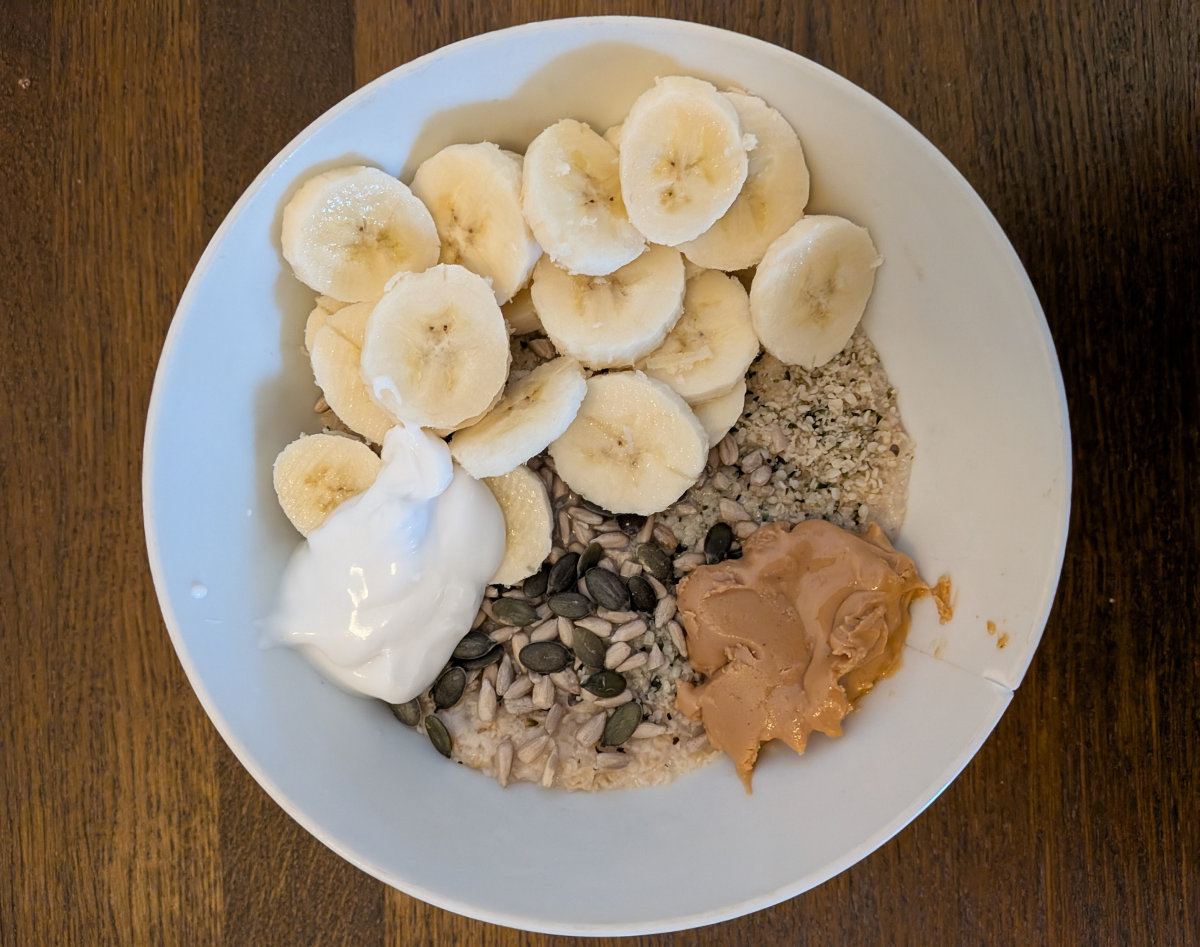
Recalling a time on solo silent retreat… I’m sitting on the sofa in my friend’s apartment, with full-length windows opening onto the balcony and the coolness of the winter air penetrated by rays of sun. Breakfast is oats, topped with peanut butter, banana, and coconut yoghurt, a favourite of mine. I take a moment to appreciate the scene, then go to finish eating quickly, feeling a sudden hurried pull. I get up with the thought ringing out in my head that I had somehow “done breakfast wrong.” I get back to meditating and trying to make the most of the retreat time.
Later that day, I’m practising walking meditation up and down the long corridor. The apartment is still and quiet; there’s barely a sound from the surrounding inhabitants. I step slowly on the carpet. My external world is calm and serene; my internal world is turbulent and chaotic as I start getting caught up in thoughts and emotions. Memories come to mind of times in my life when I felt like I didn’t act as well as I could. I start feeling a sense of guilt and shame. My mind seems to be gaining momentum in the way it presents these to me — one after the other, memory after memory. I see myself acting in an unkind way to others, failing to know things, falling short of the mark. It’s like my mind has taken the role of prosecutor and is presenting evidence at a trial to prove I’m a bad person. I can see a caricature of the proceedings: the lawyer holds up a memory for the courtroom to see, saying, “Here we have Exhibit A demonstrating just how unkind and uncaring Kynan is.” I see myself on retreat as the defendant, with no chance to speak.
I’d known a sense of self-judgement in everyday life as the driving force that pushes me both to do things well and to get things done. But the intensity and constancy of this experience surprise me. I realise how much I normally try to avoid or placate this pattern of criticism — either by turning my attention away, or by attempting to appease this part through trying as hard as I can. I’m also on retreat, so it’s not clear what I should do better to really succeed at breakfast, or how I can improve upon these memories of the past. I recall my colleague Upali telling me “everything that happens on retreat is good,” but I can’t find a way to fold this into that saying. The barrage continues. It seems genuinely bad and I feel like I’m actually a bad person. There’s a continual sense of pressure and frustration.
As the hours continue, I’m crushed under the weight of this sense of not being good enough. I do what I can to be mindful of the sensations and unpleasant feeling tone. The avalanche continues picking up speed, leaving me a wreck as the night draws on. I try skilful ignoring. Paying attention to the breath feels hopeless; investigating the sensations impossible. I curl up into a ball.
Then another memory surfaces: I’m ten years old and going to my very first extension class after being selected to represent my school. I’m so excited — I get whisked away to another school to meet other kids like me, hopeful to make some new friends. In the first class we do a science experiment — placing Smarties in a dish of water and observing the time it takes for the colours to spread and blend into new shades. In the excitement, I barely write anything down; at the end of the class they ask us to hand in our report. I quickly jot down a few notes and put my piece of paper in the pile on the teacher’s desk.
The next week I’m back at the class and the teacher has a stern look. The first thing they do is make sure everyone is listening. Then they hold up a piece of paper. I recoil – it’s my report from the last class. They say that this is inappropriate, unacceptable; this work is simply not good enough. My heart sinks. I’ve never felt so embarrassed and ashamed. I collect my piece of paper. I’m crushed. I never tell my parents, or anyone. I continue with the class, but I’m just going through the motions. The spark has been lost.
I internally vow to never let this happen again. I make sure that anytime there’s something to do, anything that might be judged or assessed, it will be done well enough that I won’t have to feel this way. This is a big job that part of me takes on: to always be good. To push myself so that I won’t be caught out by others.
Seeing this memory has a different feeling. I stop trying to observe the sensations from a distance and fully embrace the felt experience with compassion. My heart opens for this younger self. I sit with him and hear his frustrations. I recognise that bright-eyed ten-year-old and can see that he was just trying his best. It was at best an honest mistake, and at worst he was set up to fail by the adults who expected things without giving clear instruction or support. It’s clear that he didn’t deserve that, and I don’t deserve that. I hold these feelings, lovingly attuning to all this pain and difficulty.
Suddenly I can tune into why there’s such a strong sense of wanting to do things well. I see how this part of me pushes to do well to avoid feeling embarrassed and ashamed. This part of me formed to prevent this hurt. It uses internal criticism to never be caught out. It believes that I need to always be striving to do better to live up to some unreachable standard. I can see how hard this part is working. I feel its pain and exhaustion — all alone in this endless battle to always be better. I understand why it believes this is the only way forward. I feel a tenderness and warmth towards this part of me.
The lawyer, the inner critic, eating my breakfast wrong — all the same movement of protection. Each a pattern of trying to pre-emptively do something better in order to not feel judged, hurt, or attacked later. This part of me just wants to be seen and understood, to know that it isn’t alone. I offer appreciation for how hard it has been working for me. The part, previously so hard and jagged, softens and melts. The intense self-criticism shifts into understanding. I offer kindness and love to this part of me, welcoming it when it arises, appreciating its good intentions. With this, a long-neglected aspect of my being moves towards integration. I feel the spark of being alive and playful return, even if just to enjoy my breakfast and kick my legs as I sit in the sun.
I found my way through this by accident, while suffering more than I needed to. I wish I’d had a map of how to meet my parts through relationship. In the upcoming Liberating Feelings online workshop we’ll explore together how to bring the relational dimension of parts work into meditation.
The Buddha asked his monks: What happens when you drop a spoonful of salt into a glass of water? It turns undrinkable. How about the same spoonful into the Ganges? You can’t taste the salt at all.
This is something awareness can do. Open it wide enough and there is room for anything: the leftover charge of the day, an emotion you’d rather not feel, a discomfort you’ve been carrying since this morning. Nothing has to be solved. Held in a space this big, the feeling diffuses and shifts on its own. Awareness itself does the holding, with warmth and tenderness.
Begin with sound. Listen for the most distant noise, then notice the field that holds it — open, roomy, extending in every direction. Let the body appear inside that field. Then gently let whatever you are feeling come forward to be met.
Stay with it, and the feeling loosens. Where you thought there was a solid thing — sadness, or fear — you find movement, a shifting texture. Look for the one who is feeling it, and that too can’t quite be found.
What’s left is spacious knowing. Let the feeling move through it like a ripple through water.